


Peptide Purification Services for Research Projects
Peptide purification services separate the target sequence from deletion products, truncated sequences, protecting-group residues, oxidation products, and other process-related components.
However, purification performance depends on the peptide itself.
Sequence length, hydrophobicity, charge, aggregation tendency, modification type, crude quality, and target purity all influence method development.
Therefore, ALLGROWPEPTIDE reviews each purification project before confirming the process, achievable purity, recovered quantity, testing, and delivery schedule.
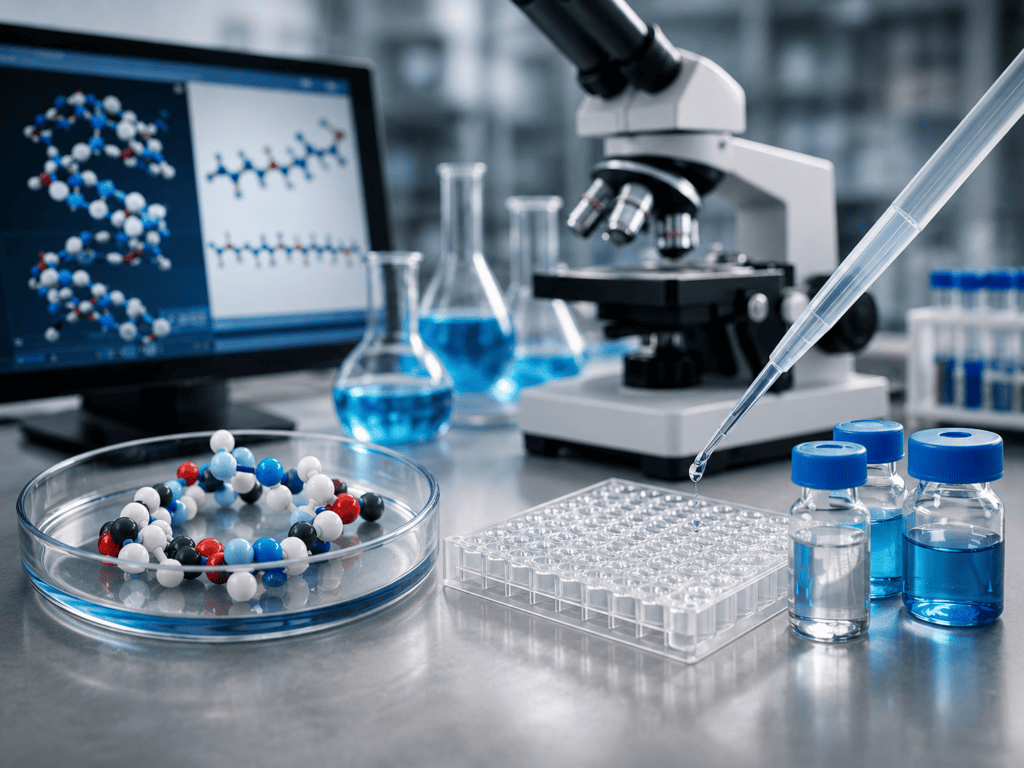
Project-Specific Peptide Purification
A standard method may work for many peptides, but it will not solve every separation challenge.
For example, a deletion sequence may differ from the target peptide by only one amino acid. Likewise, an oxidized form may show very similar chromatographic behaviour.
Therefore, purification should begin with a technical review rather than with a fixed promise.
The review should cover:
- target sequence;
- crude purity;
- crude quantity;
- expected molecular mass;
- terminal structure;
- modifications;
- solubility;
- target purity;
- required recovered quantity;
- counterion requirement;
- analytical testing.
How RP-HPLC Peptide Purification Works
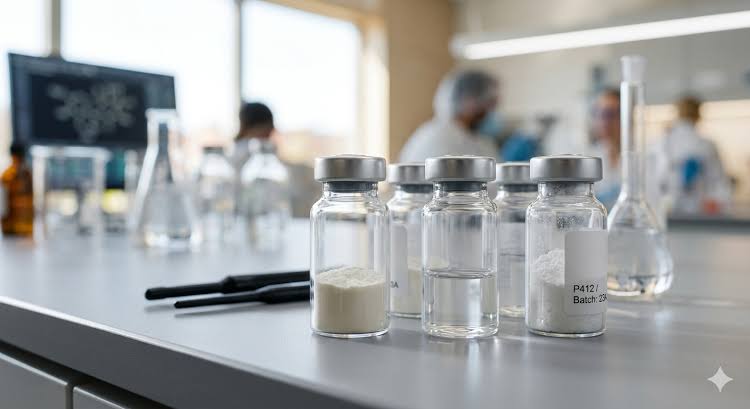
Reversed-phase high-performance liquid chromatography remains a widely used method for peptide purification.
In a typical process, the stationary phase interacts with peptides according to hydrophobicity. Meanwhile, the mobile-phase gradient changes over time, allowing different components to leave the column at different points.
Fractions are then collected and analysed. Afterward, suitable fractions can be combined, concentrated, and prepared for final processing.
Factors That Affect Peptide Purification
| Peptide Factor | Possible Purification Impact |
|---|---|
| Hydrophobicity | May increase retention, aggregation or poor recovery |
| Sequence Length | May increase the number of closely related synthesis impurities |
| Single-Residue Deletion | May create an impurity with similar chromatographic behaviour |
| Oxidation-Sensitive Residues | May generate additional molecular forms |
| Cyclization | May produce linear, partially cyclized or misconnected components |
| Fluorescent or Lipid Label | May substantially change hydrophobicity and detection response |
| Aggregation | May reduce column performance and recovered yield |
| High Target Purity | May require additional cycles and reduce final recovery |
Peptide Purification Workflow
1. Review the crude material
First, confirm the sequence, crude quantity, available chromatogram, expected mass, and target specification.
2. Evaluate solubility
Next, identify a suitable loading condition that supports dissolution without damaging the peptide.
3. Develop the separation method
The purification team then selects the stationary phase, gradient, detection wavelength, flow conditions, and fraction strategy.
4. Perform preparative separation
The crude peptide is separated into collected fractions.
5. Analyse the fractions
HPLC and mass spectrometry help identify fractions that contain the target peptide.
6. Pool suitable fractions
The selected fractions are combined according to the approved purity and identity criteria.
7. Complete final processing
Finally, the purified material is concentrated, converted into the confirmed format, lyophilized when appropriate, and packaged.
Purification Process Table
| Stage | Main Activity | Result |
|---|---|---|
| Crude Review | Assess sequence, crude profile and project target | Purification plan |
| Method Development | Select column and gradient conditions | Improved target separation |
| Preparative Run | Separate crude material and collect fractions | Individual fractions |
| Fraction Analysis | Review HPLC and mass results | Target-containing fractions |
| Pooling | Combine fractions that meet project criteria | Purified peptide solution |
| Final Processing | Concentrate, lyophilize and package | Finished research material |
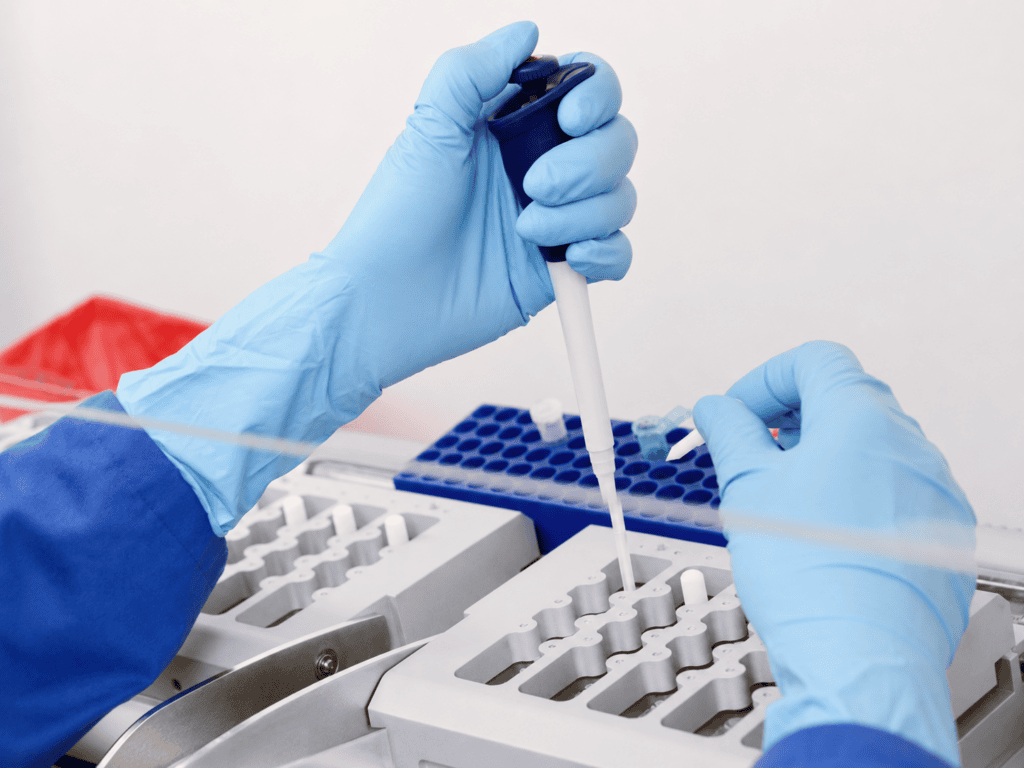
Selecting the Target Purity
A higher target purity usually requires greater separation between the target and closely related impurities.
Consequently, more purification time may be required. In addition, repeated processing may reduce final recovery.
Therefore, customers should balance:
- intended research use;
- impurity sensitivity;
- required quantity;
- achievable separation;
- budget;
- schedule.
The separate Peptide Purity Selection Guide should be internally linked here.
Difficult Peptide Purification
Highly hydrophobic peptides
These peptides may show poor aqueous solubility, strong column retention, or aggregation.
Closely related deletion sequences
A one-residue difference may produce only a small chromatographic change. Therefore, the method may require a shallow gradient or alternative conditions.
Oxidized peptides
Cys, Met, and Trp may produce oxidation-related forms. Consequently, handling conditions should limit unnecessary exposure.
Cyclic or disulfide-rich peptides
These projects may contain linear, partially folded, or incorrectly connected components.
Modified peptides
Fluorescent dyes, lipids, linkers, and affinity labels can change both retention and detector response.
Analytical Release Testing
| Test or Record | Purpose |
|---|---|
| Analytical HPLC | Evaluates final chromatographic purity |
| Mass Spectrometry | Supports target molecular identity |
| Appearance | Records the final physical presentation |
| Quantity | Confirms the amount supplied |
| Batch Number | Connects the material with testing and packaging records |
| Additional Analysis | May include content, water, counterion or another agreed test |
Frequently Asked Questions
Can you purify peptide material produced by another supplier?
Third-party crude material may be evaluated after sequence, quantity, crude profile, documentation, and shipping conditions are reviewed.
Does purification guarantee a specific recovery?
No. Recovery depends on crude quality, sequence, solubility, impurity profile, and target purity.
Can every peptide reach ≥98% HPLC purity?
No. Closely related impurities and difficult sequence properties may limit achievable separation.
Which method is commonly used?
Preparative RP-HPLC commonly supports peptide purification, although the final method should follow the project.
What documents are supplied?
Available records may include a COA, HPLC chromatogram, mass report, sequence, quantity, and batch information.
Improve the Purity of Your Peptide Project
Submit the sequence, crude quantity, current purity, chromatogram, mass information, target purity, and required recovery.
Our technical team will review the material before confirming the purification strategy.