


Peptide Lyophilization and Aliquoting Services
Peptide lyophilization and aliquoting help researchers receive material in practical, project-specific quantities.
Instead of supplying one bulk container, the peptide can be divided across individual vials, tubes, or selected plate formats. Consequently, laboratories can reduce repeated opening, simplify sample distribution, and limit unnecessary freeze-thaw exposure.
Moreover, custom labels and packaging can connect each unit with the correct sequence, batch number, quantity, and storage information.
ALLGROWPEPTIDE reviews the final format together with the peptide sequence, quantity, concentration basis, stability considerations, and project workflow.
Flexible Final Formats for Peptide Projects
The final format should match the laboratory workflow.
For example, one bulk vial may suit a single controlled study. However, multiple working aliquots may better support repeated testing, distribution across research sites, or peptide-library projects.
Therefore, customers should confirm the format before final processing begins.
| Service Element | Available Project Option |
|---|---|
| Final Presentation | Lyophilized powder or another confirmed format |
| Aliquot Quantity | Project-specific amount per vial or tube |
| Vial Format | Selected clear or amber glass vial |
| Tube Format | Individual research sample tubes |
| Library Format | Individual tubes, racks or selected plate layouts |
| Label Information | Product, sequence code, batch, quantity and storage fields |
| Outer Packaging | Protective insert, individual carton or multi-unit box |
Why Peptides Are Lyophilized
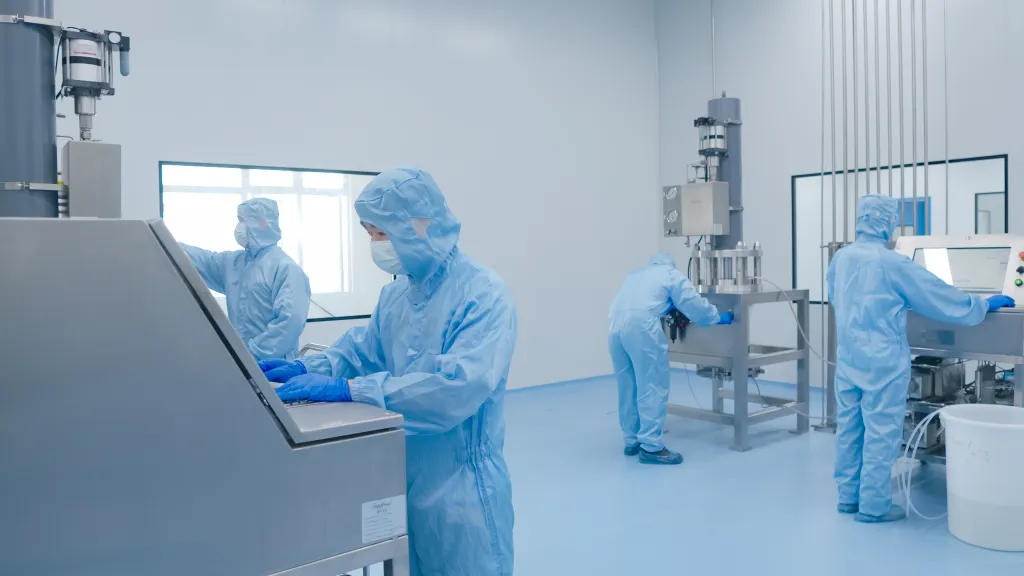
Lyophilization removes water from a frozen peptide solution under controlled conditions.
First, the prepared solution is frozen. Next, primary drying removes a large proportion of frozen water through sublimation. Finally, secondary drying reduces additional bound moisture according to the selected process.
The resulting material generally offers a practical solid format for packaging, transportation, and laboratory preparation.
However, lyophilization does not make every peptide indefinitely stable. Sequence, counterion, residual moisture, oxygen exposure, temperature, and packaging all continue to influence stability.

Custom Peptide Aliquoting
Aliquoting divides the project quantity into smaller units.
For example, a researcher may request:
1 mg × 10 vials
5 mg × 20 vials
500 µg × 50 tubes
Project-specific nmol per well
One sequence per tube
One peptide pool per vial
However, the quantity basis should be defined clearly.
A label stating “1 mg” may refer to total lyophilized material, gross peptide weight, or another project-specific measurement. Therefore, the quotation and COA should explain the measurement basis.
Aliquot Planning Table
| Project Question | Why It Must Be Confirmed |
|---|---|
| How much peptide is required per unit? | Determines filling and quantity-control requirements |
| How many units are required? | Determines total project quantity and packaging configuration |
| Is the quantity based on gross weight or peptide content? | Prevents concentration and labelling misunderstandings |
| Which vial or tube should be used? | Supports filling, storage and final presentation |
| Does the peptide require light protection? | May require amber glass or protective outer packaging |
| Will multiple sequences be packed together? | Requires clear position, label and batch control |
Lyophilization and Aliquoting Workflow
1. Confirm the project specification
The sequence, total quantity, purity, testing, final units, vial type, and label information are confirmed first.
2. Prepare the peptide solution
Next, the purified peptide fraction is prepared according to the selected processing plan.
3. Divide the material
The material is distributed into the confirmed vials, tubes, or selected project format.
4. Complete lyophilization
The filled material enters the approved freeze-drying process.
5. Inspect the final units
The team reviews the physical presentation, vial integrity, label information, and unit count.
6. Complete analytical and batch records
Applicable HPLC, mass, COA, filling, and packaging information are connected with the project batch.
7. Pack the shipment
Finally, protective inserts and outer cartons are prepared according to unit count, destination, and shipping conditions.
Workflow HTML Table
| Stage | Main Activity | Project Control |
|---|---|---|
| Specification | Confirm quantity, units, container and label | Approved packing instruction |
| Preparation | Prepare the peptide for filling | Batch and product identification |
| Aliquoting | Divide material into individual units | Unit count and target quantity |
| Lyophilization | Complete the confirmed freeze-drying process | Process record |
| Inspection | Review appearance, container and labels | Final packaging check |
| Delivery | Pack documents and finished units | Order and shipping record |

Vials, Labels and Protective Packaging
A peptide aliquoting project may include:
- clear glass vials;
- amber glass vials;
- sample tubes;
- vial caps and closures;
- product labels;
- sequence or product codes;
- batch numbers;
- quantity statements;
- storage fields;
- research-use wording;
- foam or molded inserts;
- individual cartons;
- multi-vial boxes;
- export-ready outer cartons.
However, the website should not describe a format as sterile unless a validated sterile process and supporting documentation cover that exact configuration.
Multi-Peptide and Library Formats
Peptide-library projects require stronger identification controls because many similar sequences may be supplied together.
Therefore, each position should connect with a sequence list, sample identifier, batch record, and packing map.
| Project Format | Suitable Use | Recommended Identification |
|---|---|---|
| Individual Vials | Small custom projects and repeat use | Product name, batch and quantity |
| Numbered Tubes | Peptide sets and sequence libraries | Tube number linked with a sequence map |
| Tube Rack | Organized multi-peptide projects | Rack position and sample identifier |
| Plate Format | Screening and mapping workflows | Well position and plate layout |
| Peptide Pool | Combined assay or screening projects | Pool name and component list |
Storage and Handling After Delivery
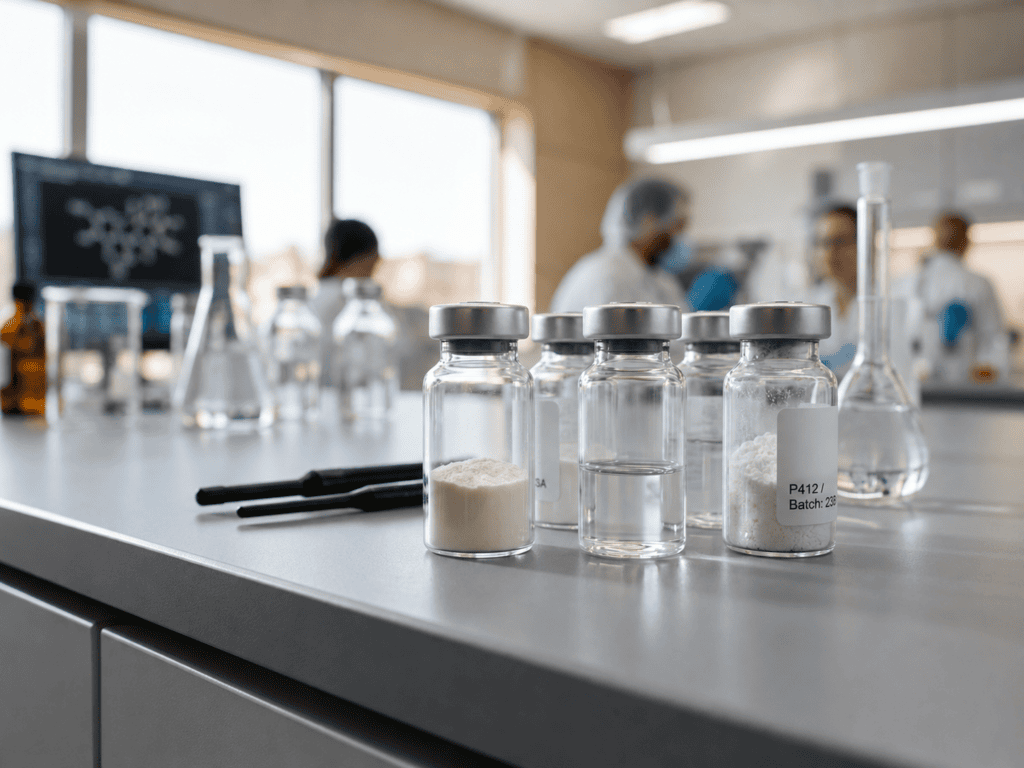
Lyophilized peptides should remain tightly sealed, dry, and protected from unsuitable temperatures and strong light.
Moreover, researchers should allow a cold vial to approach room temperature before opening it. This reduces the likelihood of moisture condensation.
After reconstitution, working aliquots can help reduce repeated freeze-thaw exposure.
Frequently Asked Questions

Can you divide one peptide batch into multiple vials?
Yes. The total quantity, quantity per vial, number of units, and measurement basis should be confirmed before processing.
Can different sequences be packed in one kit?
Yes. However, the project requires a clear sequence map, sample identifiers, unit positions, and batch records.
Can peptides be supplied in plate format?
Selected library and screening projects may support tube-rack or plate-based formats after technical review.
Does lyophilization guarantee long-term stability?
No. Sequence, moisture, oxygen, temperature, light, counterion, and packaging continue to affect stability.
Are the aliquoted vials sterile?
Sterility should only be claimed when the exact production, filling, container, and testing process has been validated accordingly.
Can custom labels and boxes be added?
Yes. Product labels, batch fields, cartons, inserts, and private-label packaging may be coordinated.
Plan Your Peptide Lyophilization and Aliquoting Project
Submit the peptide name or sequence, total quantity, purity, number of units, quantity per unit, vial preference, label fields, packaging, and destination.
Our team will then review the processing and packaging requirements.