


Batch-Specific Peptide Certificates of Analysis
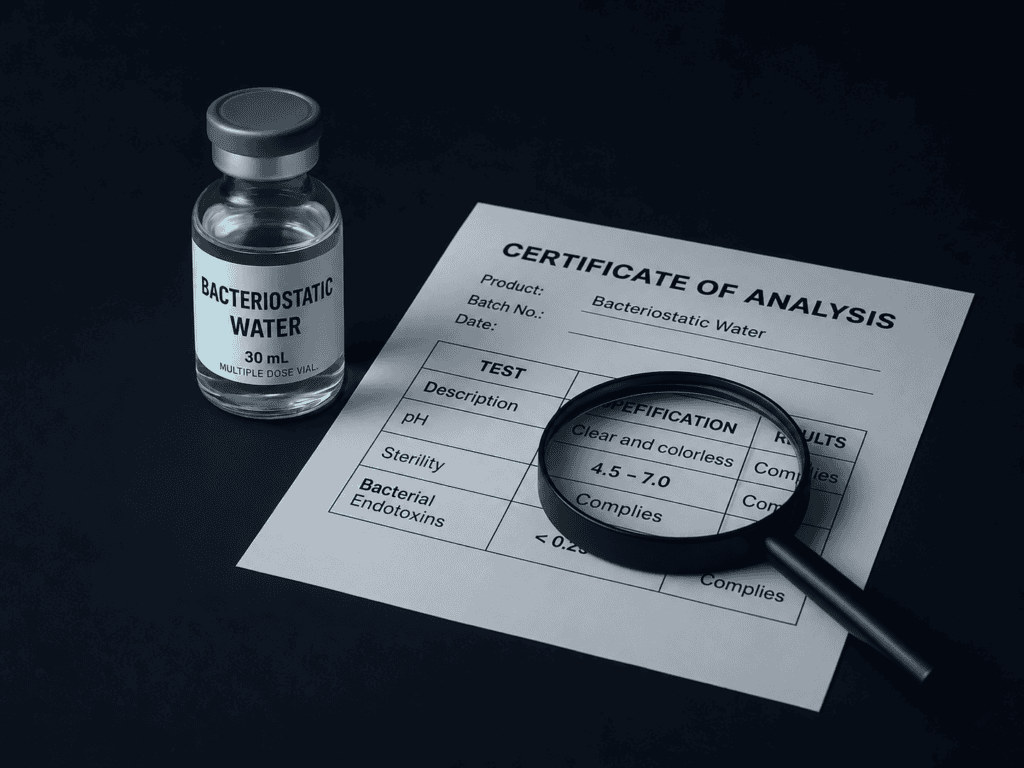
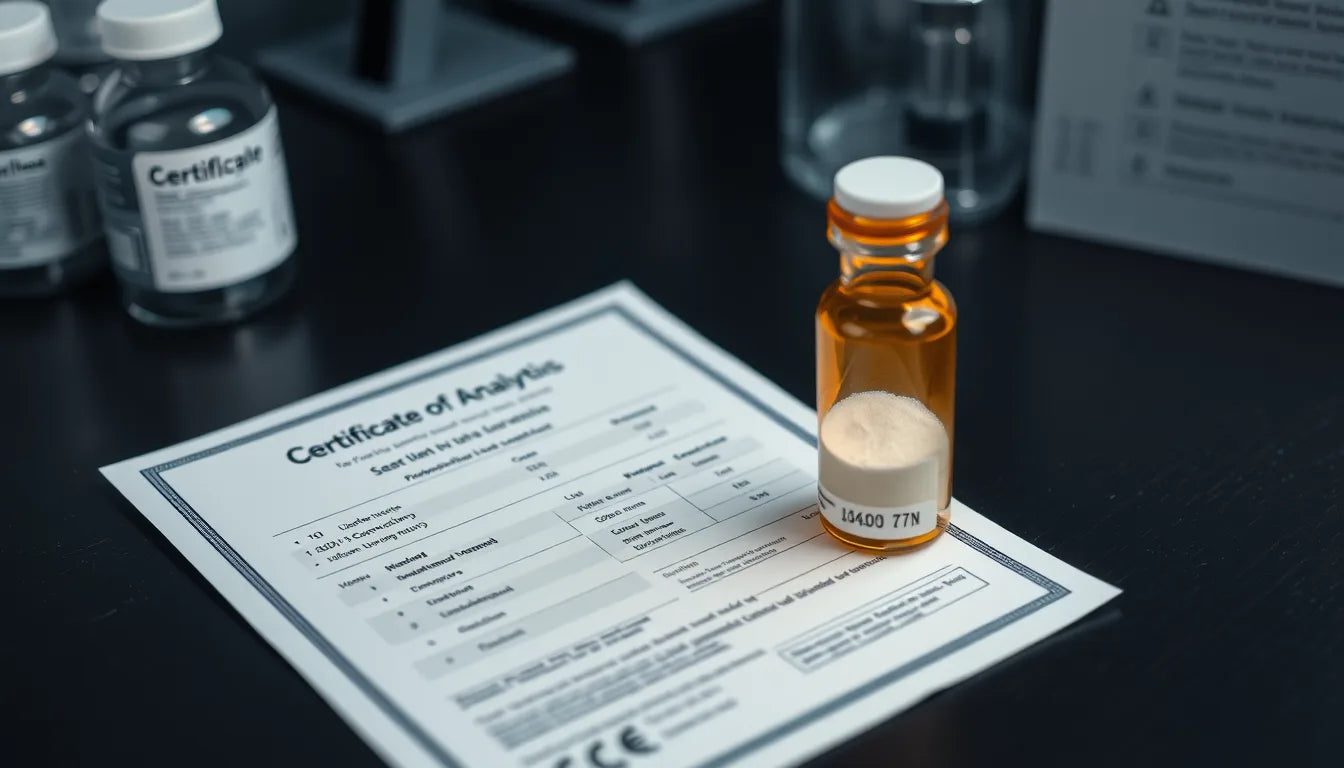
A Certificate of Analysis is a controlled document that summarizes the identity, specifications, tests, limits, and results associated with a particular product batch. Therefore, a COA should be matched to the supplied lot number. However, it should not be presented as proof that a facility is GMP certified, FDA approved, or independently accredited.
What Should a Peptide COA Include?
| COA Field | Recommended Information |
|---|---|
| Product Name | Approved name and relevant form |
| Batch or Lot Number | Unique identifier for the tested batch |
| Product Specification | Applicable quality requirements |
| Test Method | Method or analytical reference used |
| Acceptance Limit | Approved minimum, maximum or descriptive criterion |
| Test Result | Actual numerical or descriptive result |
| Release Date | Date the batch was approved for release |
| Retest or Expiry Date | Included when supported and applicable |
| Authorized Approval | Date and approval by responsible quality personnel |
| Manufacturer Information | Original manufacturer or relevant testing entity |
Example Peptide COA Test Panel
The exact test panel should be selected according to the product. Consequently, not every peptide requires the same tests.
| Test | Example Specification | Example Result Format |
|---|---|---|
| Appearance | White to off-white powder | Conforms |
| Identity | Expected molecular mass | Observed mass reported |
| HPLC Purity | ≥98% | Actual percentage |
| Peptide Content | Project-specific | Actual percentage |
| Water Content | Project-specific | Actual percentage |
| Counterion | Specified form | Actual result |
| Net Quantity | Label claim | Verified quantity |
COA Verification Process
The Product Is Identified
The product name, sequence or structure, form, and batch number are confirmed.
Tests Are Matched to Specifications
Next, each test is compared with the applicable limit.
Results Are Reviewed
Calculations, units, chromatograms, spectra, and descriptive results are checked.
Deviations Are Resolved
Any incomplete, unexpected, or out-of-specification result is reviewed before release.
The COA Is Authorized
Finally, the document is dated and approved by responsible personnel.
How to Read an HPLC Purity Result
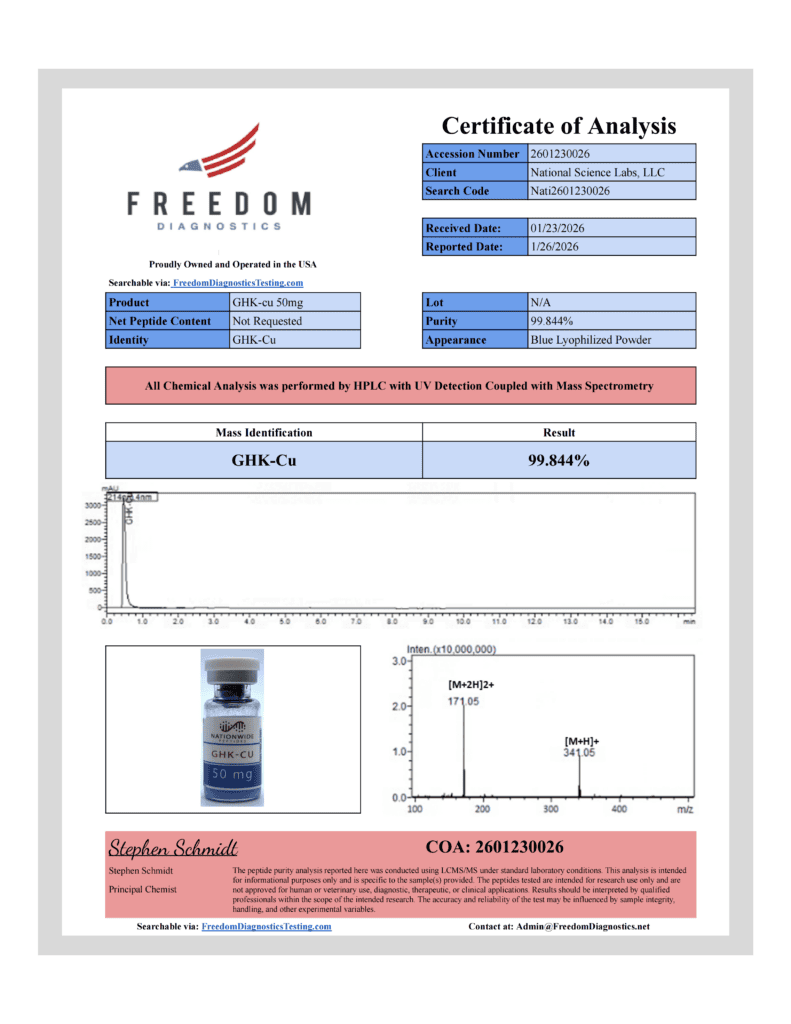
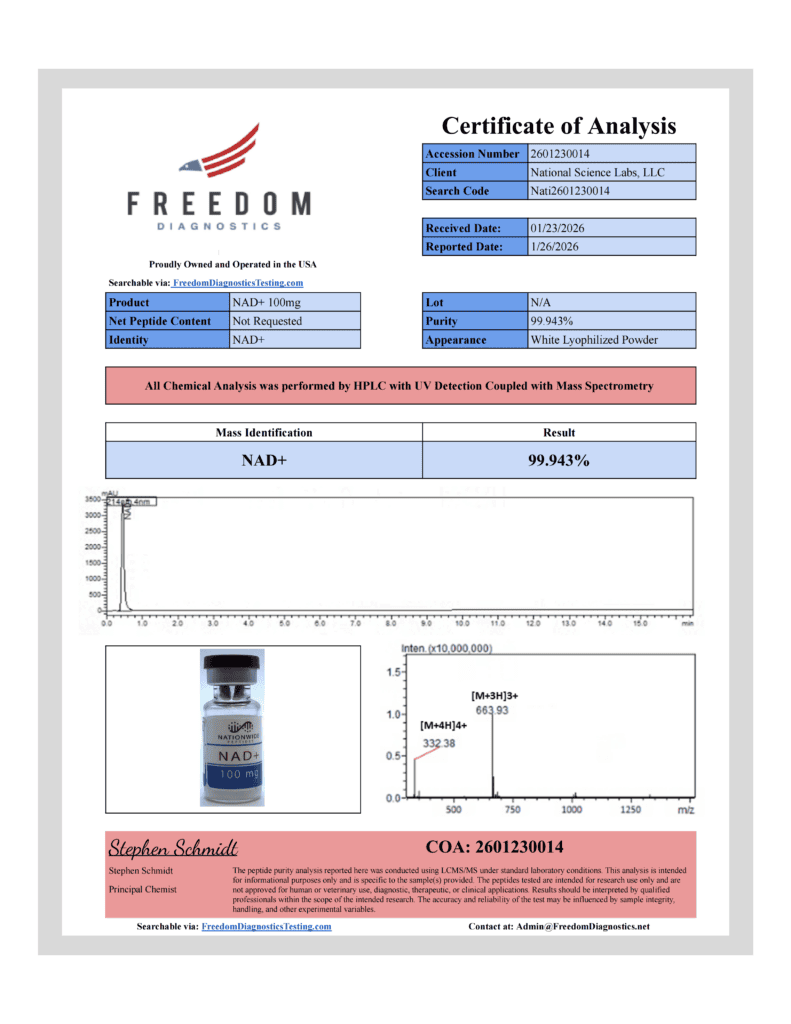
Analytical reversed-phase HPLC is widely used to evaluate peptide purity.
During analysis, peptide-related components are separated according to their chromatographic behaviour. The system then records a chromatogram with individual peaks.
In a typical area-percent calculation, the main target peak is compared with the total integrated area of detected peaks under the stated analytical conditions.
Bachem describes analytical HPLC as a standard method for peptides and notes that purity is commonly assessed with UV detection around 210–220nm. The area of the main peak relative to the total peak area is then used to estimate chromatographic purity.
However, buyers should avoid interpreting one HPLC percentage as a complete quality conclusion.
Certificate of Analysis
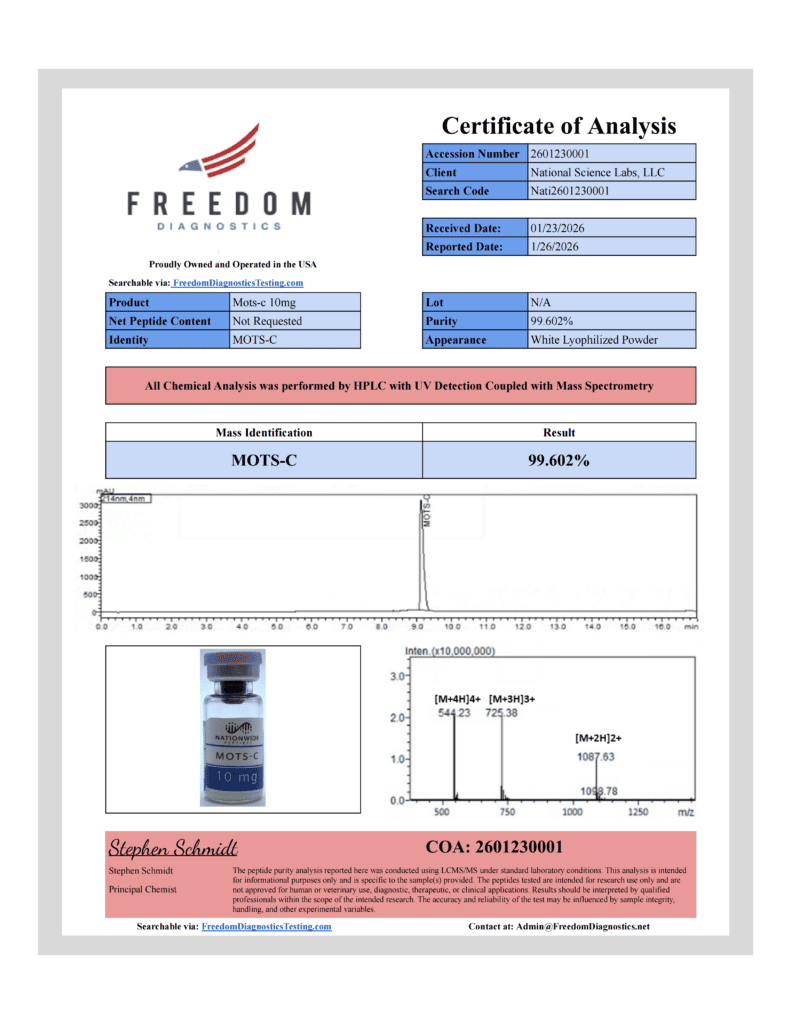
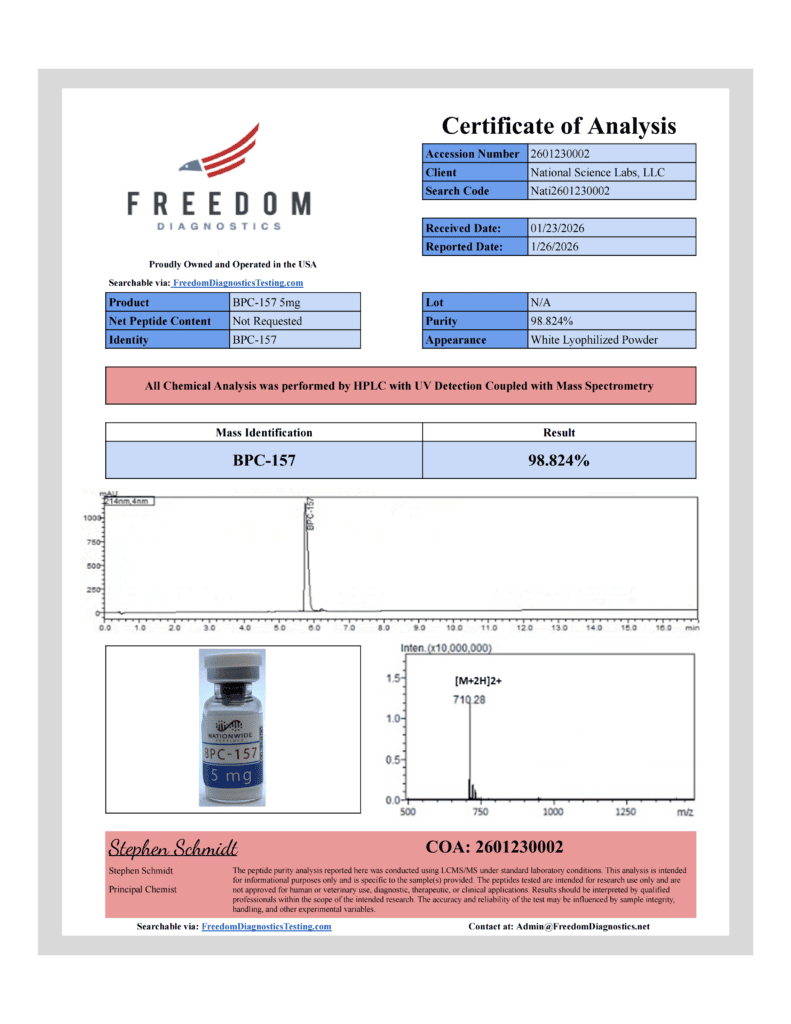
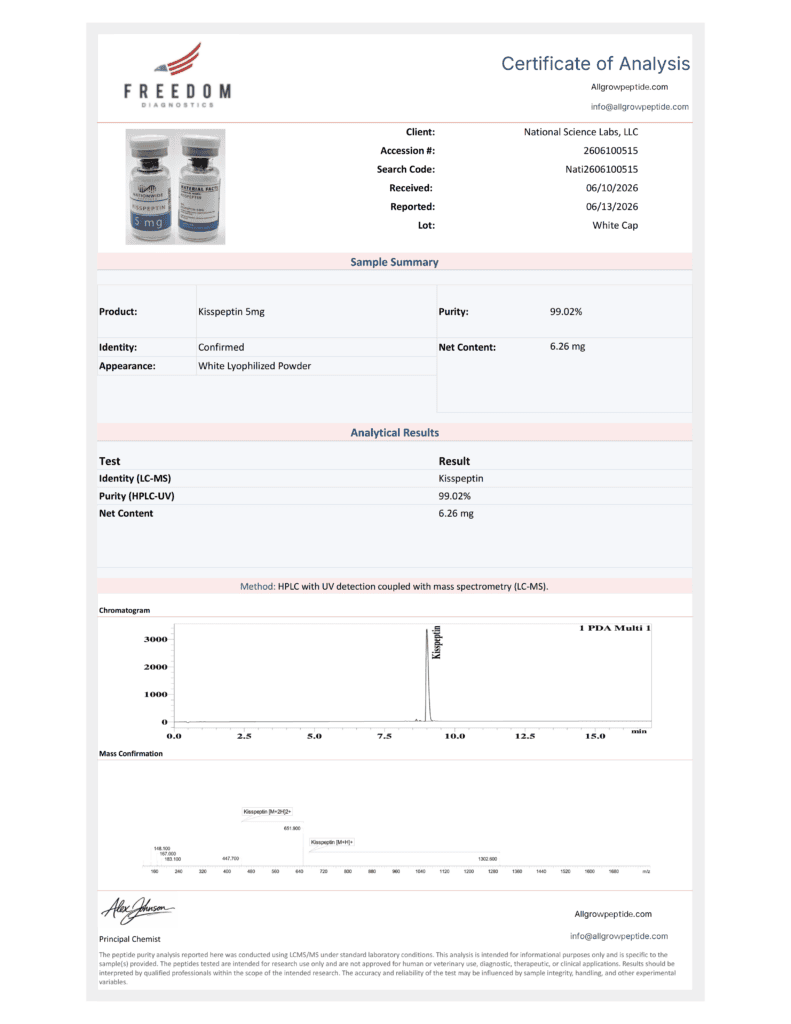
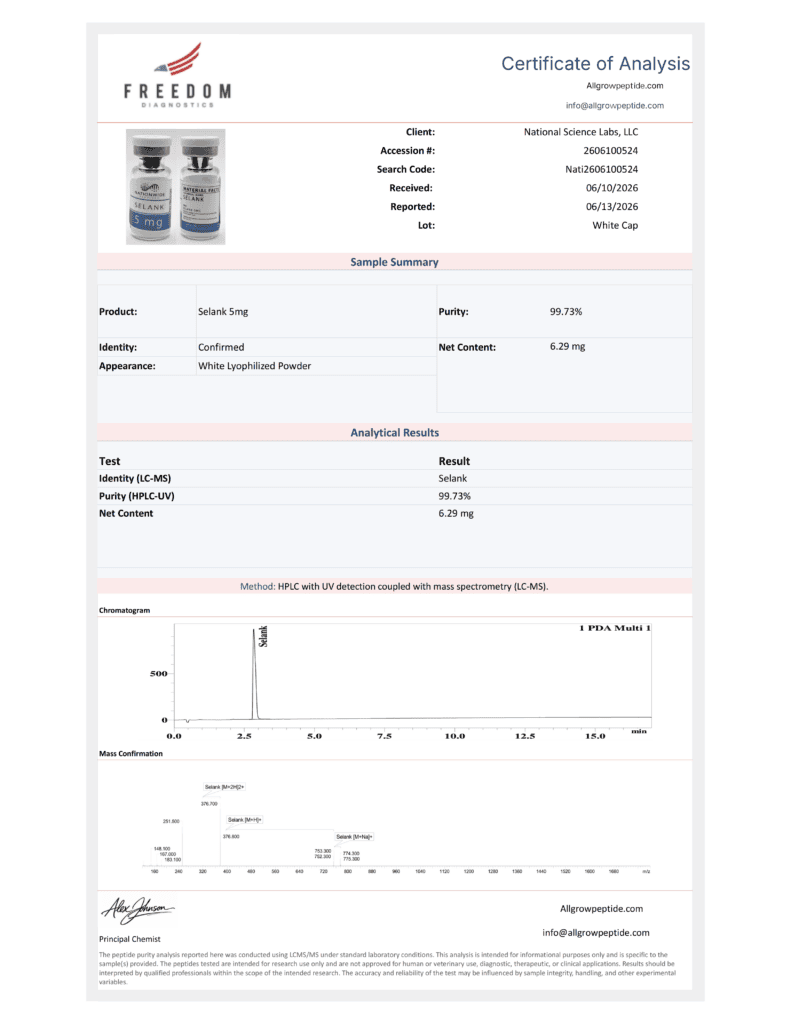
Frequently Asked Questions
Is a COA the same as an HPLC report?
No. A COA summarizes results, whereas an HPLC report contains chromatographic data.
Should every batch have a different COA?
Each independently produced or tested batch should have corresponding batch-specific documentation.
Can a supplier issue a COA based only on another company’s document?
Repackers or distributors should preserve traceability to the original manufacturer and original batch documentation. ICH Q7 specifically addresses references to original manufacturers and batch certificates
Is “passed” enough for every test result?
Numerical tests should normally show numerical results where applicable, rather than only a generic pass statement.
Request a Sample or Batch-Specific COA
Ask for available specifications and documentation before confirming your peptide order.