


Peptide Packaging and Storage Designed to Protect Batch Quality
Peptide packaging and storage requirements should be selected according to product form, sequence, stability data, moisture sensitivity, light sensitivity, temperature requirements, and transportation conditions. Therefore, one universal storage instruction should not be applied to every peptide. Instead, the label, COA, specification, and available stability information should be followed.

Packaging Is Part of Product Quality
Packaging is not used only for appearance. Instead, the container and closure are expected to protect the product from contamination, moisture, light, handling damage, and mix-ups during storage and distribution.
USP General Chapter <659> provides packaging and storage definitions for active ingredients, excipients, pharmaceuticals, and related products. Meanwhile, ICH Q7 recommends documented packaging procedures, label checks, storage-condition statements, and distribution records.
Packaging Elements
| Packaging Element | Main Function |
|---|---|
| Primary Vial | Contains and directly protects the peptide |
| Stopper and Seal | Supports closure integrity and contamination protection |
| Product Label | Identifies product, quantity, batch and storage conditions |
| Protective Insert | Reduces vial movement and impact |
| Individual Carton | Provides secondary protection and product information |
| Master Carton | Protects multiple units during transportation |
| Thermal Packaging | Supports defined temperature conditions where required |
Storage Risks That Should Be Considered
| Risk | Possible Effect | Control Approach |
|---|---|---|
| Temperature | Accelerated degradation or physical change | Follow supported storage conditions |
| Moisture | Hydrolysis, aggregation or weight variation | Use suitable sealed packaging |
| Light | Photochemical degradation | Use light-protective packaging where required |
| Oxygen | Oxidation of sensitive residues | Minimize unnecessary exposure |
| Freeze–Thaw Cycles | Instability or aggregation in solution | Use suitable aliquots when supported |
| Incorrect Reconstitution | Concentration or compatibility errors | Use an approved research protocol |
| Damaged Closure | Moisture or contamination exposure | Inspect packaging before use |
Stability-Based Storage Statements
ICH Q1A explains that stability testing is used to assess how quality changes over time under environmental factors such as temperature, humidity, and light. Consequently, retest periods, shelf lives, and recommended storage conditions should be supported by stability information rather than being selected only from general industry practice.
ICH Q1B further states that light exposure should be considered as part of stress testing and that photostability should be evaluated where appropriate.
| Product Condition | Recommended Website Wording |
|---|---|
| Lyophilized Peptide | Store according to the product label and batch documentation |
| Reconstituted Solution | Follow the validated protocol and product-specific stability data |
| Light-Sensitive Material | Protect from light when stated in the specification |
| Moisture-Sensitive Material | Keep sealed and minimize exposure to ambient moisture |
| Temperature-Sensitive Shipment | Temperature management is confirmed before dispatch |
| Opened or Damaged Vial | Do not use when package integrity has been compromised |
Packaging and Label Verification
The Correct Container Is Selected
The vial and closure are chosen according to the product and packaging specification.
Fill Quantity Is Verified
The required quantity is matched with production and packaging records.
Labels Are Checked
Product identity, batch number, quantity, storage wording, and research-use statements are reviewed.
Protective Packaging Is Added
Inserts, cartons, cushioning, moisture protection, or thermal materials are selected as required.
The Completed Batch Is Inspected
The Completed Batch Is Inspected
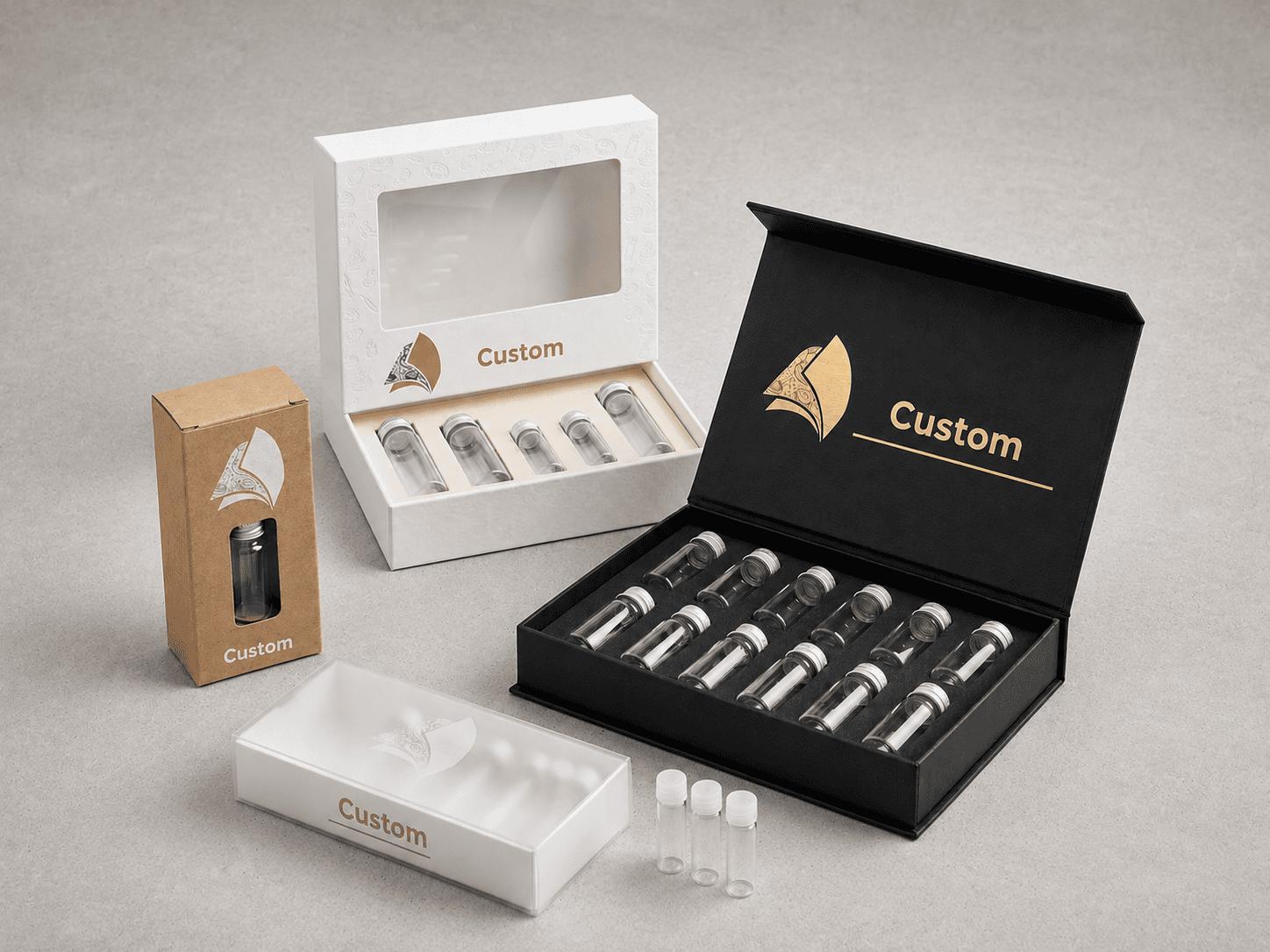
Custom Packaging
Finally, packaged units are checked for label accuracy, damage, count, and carton configuration.

Stability Monitoring Reference
ICH Q7 recommends an ongoing stability-monitoring program for APIs. As an industry reference, it describes placement of the first three commercial batches into the program in normal circumstances, followed by at least one manufactured batch per year, unless no batch is produced. However, this guidance should not be copied as a claim that your research-peptide products have completed an equivalent program unless supporting data exist.
Frequently Asked Questions
Should every lyophilized peptide be stored at exactly the same temperature?
No. Storage conditions should be based on product-specific data, labels, specifications, and stability information.
Is cold-chain shipping always required?
No. The need for cold-chain or thermal packaging depends on the product format, stability profile, route, and expected transit conditions.
Can a reconstituted peptide use the same expiry period as a lyophilized peptide?
Not automatically. Reconstitution may significantly change stability and should be evaluated separately.
Why should light-sensitive peptides be protected?
Light exposure may produce unacceptable chemical or physical change in susceptible materials, which is why photostability may need to be evaluated.
Confirm Packaging and Storage Requirements
Provide the product name, quantity, destination, and intended laboratory format so that available packaging and storage information can be reviewed.