Retatrutide has become one of the most closely watched investigational medicines in metabolic research. Search interest has grown rapidly because clinical trials have reported substantial reductions in body weight. However, the phrase “how to use retatrutide” needs an important explanation before discussing the research.
As of August 2026, retatrutide remains an investigational medication. It has not received FDA approval for obesity, diabetes, or another medical indication. Therefore, there is no FDA-approved retatrutide dosage, prescribing label, injection guide, or self-use protocol.
Eli Lilly states that retatrutide is currently available only through its clinical trials. The company also warns consumers against products sold online that claim to contain retatrutide. The FDA separately states that retatrutide cannot currently be used in compounding under U.S. federal law.
Consequently, this guide does not provide instructions for self-injection, reconstitution, or unsupervised dosing. Instead, it explains how researchers have studied retatrutide, how trial participants receive treatment, what current evidence shows, and what someone interested in the medicine should understand.
What Is Retatrutide?
How to use retatrutide
Retatrutide, also known by the research identifier LY3437943, is an investigational peptide-based medication developed by Eli Lilly.
Therefore, researchers commonly describe retatrutide as a triple hormone receptor agonist.
The term “GLP-3” sometimes appears online. However, that term is scientifically inaccurate. Retatrutide does not activate a theoretical GLP-3 receptor. Instead, one molecule targets three separate receptor systems. Lilly also recommends the term “triple agonist.”
This multi-receptor approach may influence appetite regulation, glucose metabolism, insulin signaling, and energy expenditure. However, researchers are still studying how these effects interact over long treatment periods.
How Does Retatrutide Work?
Retatrutide combines three receptor activities within one molecule. Each pathway contributes differently to metabolic regulation.
GLP-1 signaling can reduce appetite and slow gastric emptying. In addition, it supports glucose-dependent insulin secretion.
GIP signaling also affects insulin secretion and nutrient metabolism. Moreover, researchers believe combined GIP and GLP-1 activity may produce metabolic effects that differ from GLP-1 activation alone.
The glucagon component makes retatrutide particularly interesting. Glucagon signaling influences hepatic metabolism and energy expenditure. Therefore, researchers are investigating whether adding glucagon receptor activity can increase metabolic effects while maintaining an acceptable safety profile.
This mechanism distinguishes retatrutide from semaglutide and tirzepatide.
For example, the FDA approved tirzepatide under the Zepbound brand for chronic weight management in eligible adults. Wegovy products containing semaglutide also have FDA-approved indications. Retatrutide does not yet have an equivalent FDA-approved prescribing label.
How Is Retatrutide Used in Clinical Trials?
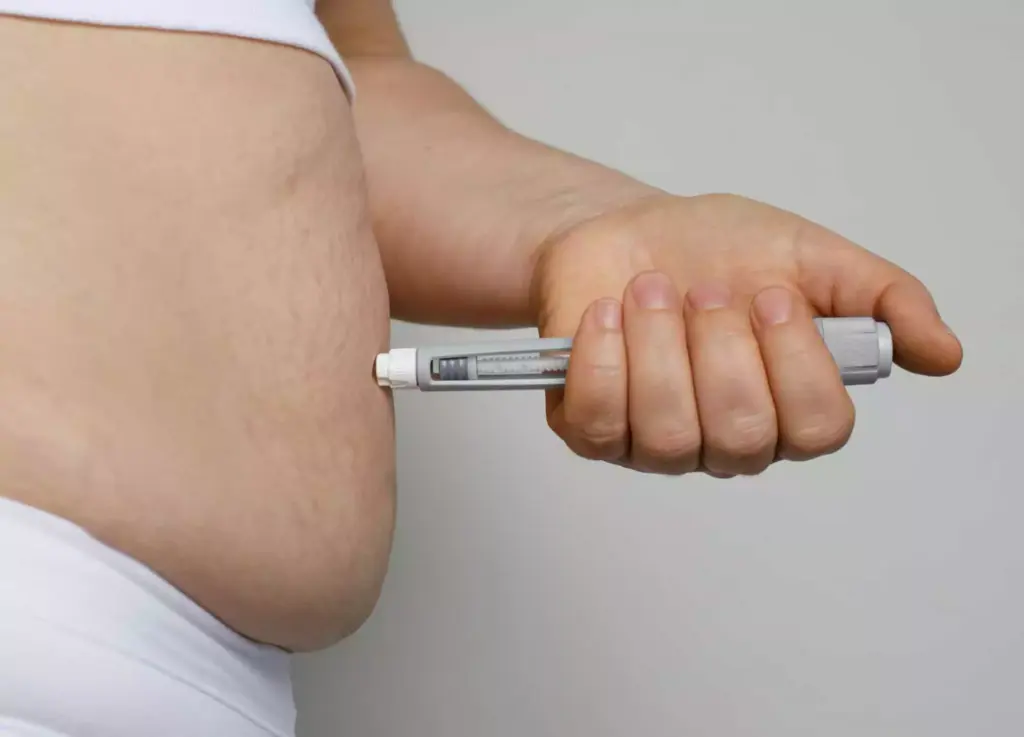
In Lilly clinical trials, researchers have administered retatrutide as a once-weekly subcutaneous injection. However, that fact should not be interpreted as a public treatment recommendation.
Clinical trials use carefully designed protocols. Participants receive screening, assigned treatment groups, scheduled follow-up, adverse-event monitoring, laboratory testing, and predefined rules for dose adjustment or discontinuation.
Researchers also control the formulation and manufacturing standards of the investigational product.
Therefore, using a substance purchased online that carries the same name is not equivalent to participating in a retatrutide trial.
Lilly specifically states that anything claiming to be retatrutide outside its clinical trials cannot be assumed to have verified purity, potency, or identity.
Is Retatrutide Taken Every Day?
No clinical development program currently treats retatrutide as a daily medication.
Published trials have evaluated once-weekly administration.
However, consumers should not convert this research information into a personal dosing schedule. Researchers selected the schedules within controlled study protocols after pharmacokinetic, tolerability, and dose-ranging investigations.
Furthermore, the final prescribing schedule could differ if regulators eventually approve retatrutide.
Until approval occurs, there is no official consumer instruction describing how much retatrutide to take, when to increase it, how missed doses should be managed, or how treatment should be discontinued.
What Is the Correct Retatrutide Dosage?
There is currently no FDA-approved retatrutide dosage for public use.
Several doses have appeared in clinical research. However, these represent experimental trial arms rather than prescribing recommendations.
Phase 2 research evaluated multiple dose groups to determine relationships among exposure, efficacy, and adverse effects.
Later Phase 3 studies also compared several target-dose groups. Researchers used gradual escalation within the trials rather than simply beginning participants at the final target dose.
This distinction matters. A clinical-trial dose answers a research question. An approved dosage, by contrast, appears only after regulators review safety, efficacy, manufacturing, pharmacology, labeling, and benefit-risk evidence.
Therefore, articles that present a “retatrutide dosing chart” as instructions for self-treatment may create a misleading impression.
Why Do Retatrutide Trials Use Dose Escalation?
Researchers often use gradual dose escalation with incretin-based treatments because gastrointestinal effects can increase when exposure rises quickly.
The Phase 2 retatrutide study provides an important example. Researchers found gastrointestinal adverse events were dose related. Moreover, a lower starting exposure reduced some of those effects.
Later Phase 3 protocols continued to use stepwise escalation.
The principle is scientifically important, but it still does not provide a public titration schedule. Trial investigators can pause, modify, or discontinue treatment according to protocol rules and participant safety.
Someone using an unregulated product does not have those safeguards.
What Did the Phase 2 Retatrutide Trial Find?
The landmark Phase 2 obesity study enrolled 338 adults and followed participants for 48 weeks.
At week 48, average weight reduction varied substantially across study groups. The highest studied group showed an average reduction of approximately 24.2% from baseline, compared with 2.1% in the placebo group.
These findings attracted major attention because the magnitude of weight reduction exceeded results previously reported for several earlier obesity medicines.
However, Phase 2 trials primarily help researchers identify dose-response relationships, safety signals, and appropriate designs for larger studies.
They do not establish a medicine as ready for routine use.
The trial also had limitations. For example, the study population was predominantly White and located in the United States. Therefore, researchers noted that generalizability required further investigation.
What Did the 2026 Phase 3 TRIUMPH-1 Trial Show?
In May 2026, Lilly announced topline results from TRIUMPH-1, a large Phase 3 obesity trial.
The study randomized 2,339 adults with obesity or overweight and at least one weight-related condition. Participants did not have diabetes.
At 80 weeks, Lilly reported average weight reductions of:
These numbers describe clinical-trial outcomes rather than expected individual results.
Moreover, people respond differently to metabolic medications. Baseline weight, diabetes status, treatment adherence, diet, activity, side effects, genetics, and other medical conditions can influence outcomes.
What Did TRIUMPH-2 Show in People With Type 2 Diabetes?
Lilly announced additional Phase 3 results in July 2026.
TRIUMPH-2 studied adults with obesity or overweight who also had type 2 diabetes.
After 80 weeks, participants in the highest retatrutide trial arm lost an average of about 20.8% of baseline body weight. Meanwhile, reductions in A1C reached up to an average of 1.6 percentage points across the studied groups.
The results are notable because people with type 2 diabetes often experience less average weight reduction with incretin therapies than people without diabetes.
Nevertheless, these findings were announced as topline Phase 3 results. Detailed peer-reviewed reports remain important for evaluating subgroup analyses, statistical methods, adverse events, and longer-term outcomes.
What Did TRIUMPH-3 Show?
TRIUMPH-3 focused on adults with severe obesity and established cardiovascular disease. Participants could have type 2 diabetes or no diabetes.
At week 80, Lilly reported an average weight reduction of 22.6% in the higher-dose trial arm.
Researchers also examined cardiovascular events. However, event numbers were relatively small, and confidence intervals remained wide. Therefore, these results should not be interpreted as proof that retatrutide prevents cardiovascular events.
Lilly also reported improvements in several cardiovascular risk markers, including waist circumference, triglycerides, non-HDL cholesterol, systolic blood pressure, and high-sensitivity C-reactive protein.
Further cardiovascular-outcomes research will help determine whether changes in risk factors translate into reductions in clinical cardiovascular events.
What Are the Most Common Retatrutide Side Effects?
Gastrointestinal symptoms have remained among the most common adverse events reported in retatrutide trials.
TRIUMPH-1 reported nausea, diarrhea, constipation, and vomiting among frequently observed events.
For example, nausea occurred in 28.6%, 38.4%, and 42.4% of participants across three retatrutide trial groups, compared with 14.8% with placebo.
Diarrhea occurred in approximately 25.2% to 34.1% of the retatrutide groups. Vomiting increased as high as 25.3% in one group.
These percentages should not be used to predict what one person will experience. However, they demonstrate why medical monitoring and controlled dose escalation play important roles in clinical development.
Other Adverse Events Researchers Are Watching
TRIUMPH-1 also reported dysesthesia, which describes unusual skin sensations such as tingling, sensitivity, or altered sensation.
Rates increased across higher-dose groups. However, Lilly reported that most cases were mild to moderate and many resolved while participants continued treatment.
Researchers continue to evaluate the complete safety profile.
That process matters because a large weight-loss effect alone does not determine whether a medication should receive approval.
Why Buying “Retatrutide” Online Is Different From Clinical-Trial Use
The rapid growth in online interest has produced an important safety problem.
Some websites sell vials labeled “retatrutide,” “research retatrutide,” or similar terms. However, consumers cannot assume that these products match the investigational material used in Lilly trials.
Potential differences include:
incorrect peptide identity;
inaccurate concentration;
contamination;
degradation;
sterility problems;
unknown excipients;
improper storage;
incorrect labeling.
Lilly warns that products sold outside its trials may contain too much active ingredient, too little, another ingredient, or harmful contaminants.
The FDA has also issued warning letters concerning businesses that marketed compounded or unapproved retatrutide products.
For example, a September 2025 FDA warning letter stated that compounded retatrutide products offered by one seller did not qualify for applicable federal compounding exemptions.
Consequently, consumers should be cautious when websites describe retatrutide as an ordinary compounded GLP-1 alternative.
Is Research-Grade Retatrutide the Same as Pharmaceutical Retatrutide?
No.
A product labeled “research use only” should not be treated as a medicine.
Research chemicals may serve analytical, laboratory, method-development, or other scientific purposes. However, a certificate showing chemical purity does not establish that a product meets pharmaceutical standards.
For example, analytical purity alone does not prove:
sterility;
endotoxin control;
accurate injectable concentration;
validated container closure integrity;
human-use manufacturing compliance;
clinical safety;
appropriate formulation.
Therefore, a high HPLC purity percentage should never be interpreted as evidence that a research peptide is suitable for self-administration.
This distinction is particularly important for injectable compounds.
Retatrutide vs Tirzepatide vs Semaglutide
People searching how to use retatrutide often compare it with medications already available through normal medical channels.
However, regulatory status represents the largest practical difference.
Tirzepatide and semaglutide have FDA-reviewed prescribing information for approved indications. Therefore, clinicians can rely on standardized manufacturing, labeled dosing, contraindications, warnings, and post-marketing surveillance.
Retatrutide has not reached that stage.
What Should Someone Interested in Retatrutide Do?
Someone interested in retatrutide should first understand that the drug remains experimental.
Rather than buying unapproved material online, a person can discuss existing FDA-approved treatment options with a qualified healthcare professional.
Another legitimate route may involve participation in an authorized clinical trial when enrollment criteria and trial availability allow it.
ClinicalTrials.gov provides records for registered studies. These records usually describe eligibility requirements, locations, study design, recruitment status, and sponsor information.
For example, TRIUMPH-1 is registered under ClinicalTrials.gov identifier NCT05929066.
However, joining a trial requires screening by the research team. Buying a peptide from an online seller does not constitute clinical-trial participation.
What Monitoring Happens During Retatrutide Research?
Clinical trials evaluate much more than body weight.
Depending on the protocol, researchers may monitor metabolic markers, vital signs, adverse events, laboratory parameters, medication use, cardiovascular measures, and treatment adherence.
Investigators also document whether participants discontinue treatment because of side effects.
For example, TRIUMPH-1 reported treatment discontinuation because of adverse events in 4.1%, 6.9%, and 11.3% of participants across the three retatrutide groups, compared with 4.9% in the placebo group.
These numbers demonstrate why tolerability matters alongside efficacy.
A medication can produce strong average results while still being unsuitable for certain individuals.
Does Retatrutide Require Diet and Exercise?
Modern obesity trials typically evaluate medication within a broader treatment framework rather than as an isolated substitute for nutrition and physical activity.
Therefore, interpreting retatrutide research as “take an injection and ignore lifestyle factors” oversimplifies the science.
Nutrition also becomes particularly important during substantial weight reduction. Adequate protein intake, micronutrient status, hydration, physical activity, and preservation of lean mass can affect overall health.
However, nutritional requirements vary considerably between individuals.
Anyone receiving an approved weight-management medication should follow individualized medical and nutritional guidance.
For retatrutide specifically, no consumer lifestyle program has been established through an approved prescribing label because the drug remains investigational.
How Long Does Retatrutide Take to Work?
Clinical-trial data suggest that weight change develops progressively rather than immediately.
Phase 2 researchers assessed outcomes at 24 and 48 weeks. Meanwhile, major Phase 3 obesity studies have evaluated outcomes over approximately 80 weeks or longer.
TRIUMPH-1 also included a prespecified extension involving certain participants with higher baseline BMI. Participants who continued treatment were followed for as long as 104 weeks.
Therefore, published results represent long-term averages rather than rapid short-term effects.
Comparisons based on several days or a few weeks of use do not reflect how retatrutide has been studied.
What Happens If Retatrutide Eventually Receives FDA Approval?
If regulators approve retatrutide, the practical meaning of “how to use retatrutide” will change substantially.
An FDA-approved product would come with official prescribing information. That document would define indications, recommended dosage, dose escalation, route of administration, contraindications, warnings, adverse reactions, storage, drug interactions, and instructions for specific populations.
Manufacturing would also need to meet approved specifications.
As of July 23, 2026, Lilly stated that it plans to submit a Biologics License Application for retatrutide to the FDA in the first quarter of 2027. Therefore, approval has not yet occurred and should not be assumed.
Regulatory review can also lead to changes in labeling, indications, dosage, or warnings.
Frequently Asked Questions About How to Use Retatrutide
Can I Use Retatrutide for Weight Loss Now?
Retatrutide is not currently FDA-approved for weight loss.
Although Phase 2 and Phase 3 trials have reported substantial average weight reduction, trial results do not create approval for public use.
In addition, Lilly states that retatrutide is legally available only through its clinical trials at this stage.
People seeking medical weight management can instead discuss approved options with a licensed healthcare professional.
How Often Was Retatrutide Given in Studies?
Clinical studies have evaluated retatrutide as a once-weekly subcutaneous injection.
However, this describes the research protocol rather than a consumer instruction.
There is no FDA-approved retatrutide prescribing guide that tells the general public how to inject, reconstitute, measure, or titrate the compound.
What Is the Best Retatrutide Dose?
There is no approved “best dose.”
Researchers have compared different experimental dose groups to determine efficacy and tolerability.
In addition, larger doses have sometimes produced greater average weight reduction but also higher rates of certain adverse effects and treatment discontinuation.
Therefore, trial results should not be converted into an individual dosing recommendation.
Can Retatrutide Be Combined With Semaglutide or Tirzepatide?
No established FDA-approved protocol supports combining retatrutide with semaglutide or tirzepatide.
Moreover, retatrutide remains investigational.
Combining incretin-based compounds could change gastrointestinal effects, glucose regulation, appetite suppression, and other physiological responses.
Therefore, people should not create their own combination protocols from online dosing discussions.
Is Retatrutide the Same as Mounjaro or Zepbound?
No.
Mounjaro and Zepbound contain tirzepatide, which activates GIP and GLP-1 receptors.
Retatrutide activates GIP, GLP-1, and glucagon receptors.
Therefore, they are different molecules with different pharmacological profiles.
Is Retatrutide Better Than Semaglutide?
Current studies suggest retatrutide may produce substantial weight reduction. However, direct claims that it is simply “better” are premature.
Semaglutide has an established regulatory history, approved indications, extensive clinical data, and real-world safety monitoring.
Retatrutide remains under development.
Therefore, efficacy percentages from separate trials should not be treated as a complete head-to-head comparison.
Key Takeaways
Understanding how to use retatrutide currently requires separating clinical research from consumer treatment.
Retatrutide is a triple GIP, GLP-1, and glucagon receptor agonist. Clinical trials have evaluated it through once-weekly subcutaneous administration under controlled research protocols.
The Phase 2 obesity trial reported average weight reductions reaching approximately 24% at 48 weeks in one study group. More recently, TRIUMPH-1 reported average reductions reaching 28.3% at 80 weeks in one Phase 3 trial arm.
Meanwhile, TRIUMPH-2 and TRIUMPH-3 expanded the evidence into populations with type 2 diabetes and established cardiovascular disease.
However, these results do not create a public retatrutide dosing protocol.
As of August 2026, retatrutide remains investigational. The FDA has not approved it, and the agency states that retatrutide cannot currently be used in compounding under federal law.
Therefore, products marketed online as ready-to-use retatrutide should not be treated as equivalent to the investigational medicine studied in Lilly-sponsored trials.
For now, the scientifically accurate answer to “how to use retatrutide” is straightforward: retatrutide should only be administered within an authorized clinical study according to that study’s protocol until regulatory approval establishes official instructions for medical use.
References
Jastreboff AM, Kaplan LM, Frías JP, et al. Triple–Hormone-Receptor Agonist Retatrutide for Obesity — A Phase 2 Trial. New England Journal of Medicine. 2023;389:514–526.
Eli Lilly and Company. What to Know About Retatrutide. Medically reviewed and updated July 2026.
Eli Lilly and Company. Retatrutide Delivered Powerful Weight Loss in Pivotal Phase 3 Obesity Trial. TRIUMPH-1 topline results, May 21, 2026.
Eli Lilly and Company. Retatrutide Successful in Two Additional Phase 3 Obesity Trials. TRIUMPH-2 and TRIUMPH-3 topline results, July 23, 2026.
ClinicalTrials.gov. A Study of Retatrutide (LY3437943) in Participants Who Have Obesity or Overweight — TRIUMPH-1. NCT05929066.
U.S. Food and Drug Administration. FDA’s Concerns With Unapproved GLP-1 Drugs Used for Weight Loss. Includes current information regarding retatrutide and compounding.
U.S. Food and Drug Administration. GLP-1 Solution Warning Letter. September 9, 2025.
U.S. Food and Drug Administration. FDA Approves New Medication for Chronic Weight Management. Tirzepatide/Zepbound approval information.
U.S. Food and Drug Administration. Wegovy Prescribing Information. Current FDA labeling for semaglutide products.