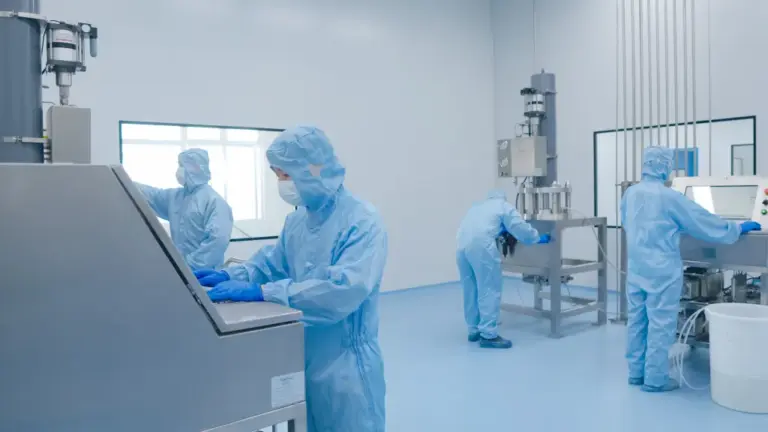
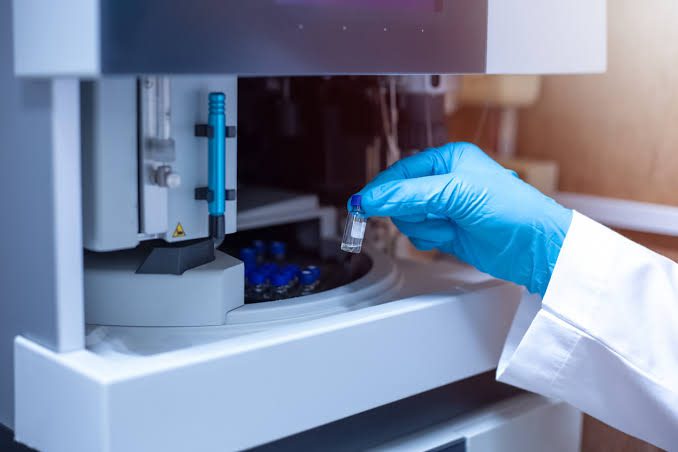
Custom peptide synthesis gives researchers direct control over amino acid sequence, terminal chemistry, isotopic composition, molecular labels, post-translational modifications, and final presentation. Instead of relying only on naturally isolated peptides or recombinant expression, a laboratory can define a target sequence and obtain a chemically assembled material that matches a specific experimental question.
This flexibility supports work across molecular biology, biochemistry, immunology, structural biology, proteomics, diagnostics, biomaterials, and early-stage drug discovery. Researchers may order a short antigenic fragment for antibody development, a phosphorylated sequence for an enzyme assay, a fluorescent probe for microscopy, or a set of related analogues for structure–activity analysis.
Modern custom peptide synthesis usually relies on solid-phase peptide synthesis, commonly abbreviated SPPS. In this method, chemists assemble the sequence step by step while the growing peptide remains attached to an insoluble resin. Fmoc-based SPPS has become a widely used approach because it separates temporary N-terminal protection from acid-sensitive side-chain protection and resin cleavage.
However, no synthesis method works equally well for every sequence. Length, hydrophobicity, charge distribution, aggregation tendency, amino acid composition, terminal structure, modification type, purity target, and requested quantity can all affect feasibility. Therefore, an effective project begins with sequence review rather than with an automatic price calculation.
This article explains the molecular basis of custom peptide synthesis, the main synthetic workflow, relevant biological research applications, analytical quality controls, storage considerations, and practical decisions that help laboratories specify a peptide correctly.
What Is Custom Peptide Synthesis?
Custom peptide synthesis is the controlled chemical or biochemical production of a peptide according to a sequence and specification selected by the researcher.
The term does not describe one molecule. Instead, it describes a manufacturing process that can produce many different molecules. Each finished peptide has its own:
Amino acid sequence
Molecular formula
Molecular weight
Net charge
Hydrophobicity
Terminal structure
Modification profile
Solubility behavior
Analytical signature
A peptide itself consists of amino acid residues joined mainly through amide bonds, more commonly called peptide bonds. In conventional chemical synthesis, the carboxyl group of one protected amino acid reacts with the amino group of the growing chain. Repeating this reaction creates a sequence-defined peptide backbone.
Common Abbreviations
Several abbreviations appear frequently in custom peptide projects:
A custom-synthesized peptide belongs to the peptide or polypeptide class, provided that its principal structure consists of amino acid residues linked through peptide bonds.
Nevertheless, the final molecule may include components that do not occur in ordinary ribosomal proteins. Examples include D-amino acids, N-methylated residues, beta-amino acids, fatty acids, fluorophores, polyethylene glycol units, biotin, chelators, stable isotopes, or synthetic linkers.
Chemical synthesis can therefore access molecular designs that standard recombinant expression cannot produce easily. It also allows researchers to place a modification at one defined residue instead of generating a mixture of differently modified products.
Critical Scientific Distinction: Custom peptide synthesis is a production method, not a peptide, protein, hormone, vitamin, coenzyme, or small molecule. The requested amino acid sequence and its attached chemical groups determine the classification, formula, molecular weight, and biological behavior of the final product.
Peptides Versus Proteins
Peptides and proteins both contain amino acid chains, but the boundary between them does not depend on one universally accepted residue count. In practice, researchers often use “peptide” for shorter chemically accessible chains and “protein” for longer chains that adopt more complex folded structures.
SPPS commonly supports short and medium-length research peptides. As chain length rises, cumulative side reactions, incomplete couplings, aggregation, and purification difficulty become more important. For longer targets, researchers may synthesize several fragments and join them through native chemical ligation or another chemoselective ligation strategy.
Molecular Structure and Chemical Composition
Custom peptide synthesis does not have a single molecular formula. The formula must be calculated from the exact sequence, terminal groups, counterions, and modifications.
For an unmodified linear peptide, the central structural pattern can be represented as:
H₂N–CHR₁–CO–NH–CHR₂–CO–NH–CHR₃–COOH
Each “R” group represents the side chain of one amino acid. During peptide-bond formation, the reacting amino and carboxyl groups lose the elements of water. Consequently, the molecular weight of a peptide cannot be calculated by simply adding the masses of free amino acids without accounting for condensation.
Custom Peptide Production
Structural Elements That Change Molecular Weight
The following specifications alter the final molecular formula or measured mass:
N-terminal acetylation
C-terminal amidation
Phosphorylation
Sulfation
Methylation
Lipidation
Glycosylation
Disulfide-bond formation
Fluorescent dye conjugation
Biotinylation
Stable-isotope labeling
Incorporation of non-canonical amino acids
Addition or removal of salt counterions
For example, forming one intramolecular disulfide bond oxidizes two cysteine thiols and removes two hydrogen atoms from the molecular formula. Meanwhile, phosphorylation adds a phosphate-containing group and introduces additional acidity that can influence synthesis, purification, and solubility.
Sequence-Dependent Synthesis Difficulty
Two peptides with the same residue count may behave very differently. A balanced, soluble 20-residue sequence may assemble cleanly, while another 20-residue peptide can aggregate strongly on the resin or co-elute with deletion impurities.
Recent work continues to identify amino acid composition and chain aggregation as major causes of difficult coupling behavior during SPPS. Aspartimide formation, oxidation, racemization, diketopiperazine formation, incomplete deprotection, and side-chain reactions can also reduce crude quality.
How Custom Peptide Synthesis Works
Sequence and Feasibility Review
A technical review should examine:
Total sequence length
Hydrophobic residue clusters
Repeated residues
Aspartic acid-containing motifs
Cysteine number and pairing requirements
Methionine and tryptophan oxidation risk
N-terminal glutamine behavior
Expected net charge
Terminal groups
Modification location
Required purity
Final quantity
Intended assay
This review does not predict every outcome. However, it helps the chemist select a resin, protecting-group scheme, coupling strategy, cleavage conditions, purification method, and analytical plan.
Resin Loading
In SPPS, the first protected amino acid or a suitable linker connects the target peptide to an insoluble polymer support. The resin determines the C-terminal functionality.
For example, one resin chemistry may release a peptide with a free C-terminal carboxylic acid, whereas another can generate a C-terminal amide. Resin loading also affects local chain density. Very high loading can increase intermolecular aggregation for difficult sequences, so lower-loading resins may improve accessibility in some projects.
Repeated Deprotection and Coupling
Fmoc-SPPS usually follows a repeated cycle:
Remove the temporary Fmoc group.
Wash away soluble reagents and by-products.
Activate the next protected amino acid.
Couple it to the free N-terminal amine.
Wash the resin.
Repeat until the sequence is complete.
SPPS retains the growing chain on the resin, which allows excess soluble reagents to leave through washing and filtration. This operational advantage helped establish SPPS as the dominant method for many research-scale peptide projects.
Small reductions in individual coupling efficiency accumulate across a long sequence. As an illustrative calculation, 29 coupling steps performed at 99% efficiency would leave approximately 74.7% theoretical full-length material before accounting for deprotection, cleavage, handling, and side reactions. At 98% per step, the theoretical figure falls to about 55.7%. This mathematical effect explains why difficult sequences can generate complex crude mixtures even when most individual reactions work well.
Cleavage and Global Deprotection
After the final residue has been added, a cleavage mixture releases the peptide from the resin and removes acid-labile side-chain protecting groups. The crude material may contain:
Full-length target peptide
Deletion sequences
Truncated chains
Incompletely deprotected products
Oxidized variants
Rearranged products
Residual scavengers or protecting-group fragments
Therefore, successful chain assembly does not automatically mean that the finished material has reached the requested purity.
Purification and Isolation
Reversed-phase HPLC separates peptide components according to their interactions with the stationary phase and mobile-phase gradient. It remains one of the most versatile methods for peptide purification and analytical assessment.
After purification, the collected fraction may undergo concentration, counterion adjustment, sterile filtration where appropriate, and lyophilization. The final physical form may be a fluffy powder, compact cake, film, or partly amorphous solid. Appearance alone cannot confirm identity or purity.
Biological Roles Investigated Using Custom Peptides
Custom peptide synthesis has no biological role of its own. Instead, it gives laboratories access to defined peptides that can probe biological mechanisms.
Receptor and Ligand Interactions
Researchers can synthesize receptor-binding fragments, truncated analogues, alanine-substitution variants, or modified ligands. Comparing their activity can reveal which residues contribute to binding affinity, receptor activation, selectivity, or antagonism.
Enzyme–Substrate Recognition
Synthetic peptides often serve as substrates for kinases, phosphatases, proteases, acetyltransferases, deacetylases, and other enzymes. A laboratory can place a candidate recognition motif inside a controlled sequence and measure product formation or substrate loss.
Antibody and Epitope Research
Linear peptides derived from a protein sequence can support antibody generation, epitope mapping, assay controls, and competition studies. However, a linear peptide may not reproduce a conformational epitope that depends on protein folding or distant residues.
Cell Signaling and Pathway Analysis
Modified peptides can mimic phosphorylation, acetylation, methylation, or proteolytic processing states. Researchers may then examine how a defined molecular state changes binding, localization, enzyme recognition, or downstream signaling.
Biomaterials and Self-Assembly
Sequence-defined peptides can form fibers, sheets, nanoparticles, hydrogels, or other supramolecular structures. Because assembly depends strongly on sequence, charge, concentration, pH, temperature, and solvent conditions, each material system requires independent characterization. One OBOC screening study, for example, identified self-assembling pentapeptides from a much larger sequence space rather than assuming that all short peptides would assemble similarly.
Peptide Laboratory
Why Custom Peptide Synthesis Is Used in Laboratory Research
Laboratories use custom peptides when the research question requires a molecule that is:
Absent from commercial catalogs
Sequence-specific
Modified at a defined residue
Labeled for detection
Designed as a positive or negative control
Part of a systematic variant series
Required in several purity grades
Needed as a reference standard
Difficult to obtain through expression
Applications include enzyme kinetics, binding assays, cell culture studies, immunoassays, proteomics, structural analysis, affinity purification, microscopy, biomarker research, and preclinical model development.
Practical Case: Designing a Phosphopeptide for a Binding Assay
Suppose a research group wants to study whether a protein domain recognizes a phosphorylated serine motif.
A useful project design could include:
The phosphorylated target peptide
The same sequence without phosphorylation
A serine-to-alanine negative-control peptide
An N-terminally biotinylated version for immobilization
A short spacer between biotin and the recognition sequence
This design separates modification-dependent binding from sequence-independent attachment effects. Moreover, ordering the controls at the same time reduces the risk that batch or handling differences will complicate interpretation.
Comparing Custom Chemical Synthesis and Recombinant Expression
The following table summarizes general scientific differences. Project-specific feasibility still depends on sequence, scale, folding, and modification requirements. Chemical synthesis provides particularly direct access to non-canonical residues and site-defined modifications, whereas recombinant expression often becomes more practical for much larger proteins.
Parameter
Custom Chemical Synthesis
Recombinant Expression
Product class
Sequence-defined synthetic peptide or polypeptide
Biologically expressed peptide or protein
Main bond formation
Stepwise chemical amide-bond formation
Ribosomal peptide-bond formation
Sequence direction
Usually C-terminus toward N-terminus
N-terminus toward C-terminus
Non-canonical residues
Often directly accessible
Requires specialized biological methods
Site-specific modification
Can be installed at a defined position
May require enzymatic or cellular processing
Typical strength
Short or medium-length modified sequences
Longer folded proteins and larger quantities
Identity testing
MS or LC-MS, supported by other methods
MS, sequencing, electrophoresis and folding assays
Major distinction
Chemical control over individual residues
Cell-based production of genetically encoded chains
Stability and Laboratory Handling
Peptide stability depends on sequence and formulation. No single storage rule applies to every custom peptide.
As a general laboratory principle, dry peptides usually tolerate storage better than aqueous peptide solutions. Moisture, oxygen, light, repeated warming, extreme pH, proteases, and freeze–thaw cycles can accelerate chemical or physical change. Published recommendations for peptide standards also emphasize aliquoting, controlled handling, fit-for-purpose quantification, and minimizing repeated freeze–thaw exposure.
Lyophilized Material
Keep the vial sealed while it approaches room temperature. Opening a cold vial immediately can cause atmospheric moisture to condense on the powder.
Long-term storage commonly uses frozen conditions, often around −20°C or below, although the appropriate condition should follow sequence-specific stability data and the supplied documentation.
Reconstituted Peptides
Solvent selection should reflect charge and hydrophobicity rather than a universal recipe. Water may work for a highly charged peptide, while a hydrophobic sequence may need a small amount of an organic co-solvent before gradual dilution into the experimental buffer.
The laboratory should also confirm that the final solvent composition remains compatible with the assay. A solution that dissolves the peptide efficiently can still disrupt cells, enzymes, membranes, or binding measurements.
Maintaining Sample Integrity
1. Review the Sequence and Documentation
Confirm the sequence, termini, modifications, counterion, purity result, molecular mass, and supplied quantity before opening the vial.
Avoid assuming that a product name alone defines the chemical structure.
2. Allow Temperature Equilibration
Keep the sealed vial at room temperature until the container has equilibrated.
Avoid opening a frozen vial immediately, because condensation can introduce uncontrolled moisture.
3. Select an Assay-Compatible Solvent
Estimate peptide charge and hydrophobicity, then choose a suitable starting solvent.
Avoid adding a large volume before confirming that the peptide dissolves.
4. Reconstitute Gradually
Add part of the solvent, mix gently, inspect the solution, and continue dilution as needed.
Avoid aggressive foaming or prolonged exposure to unnecessary heat.
5. Prepare Single-Use Aliquots
Divide the solution according to expected experimental use.
Avoid storing the entire project quantity in one repeatedly accessed tube.
6. Record Concentration Assumptions
State whether concentration calculations use gross powder weight, peptide content, or an independently measured concentration.
Avoid equating chromatographic purity with net peptide content.
7. Store Under Defined Conditions
Protect light-sensitive or oxidation-prone sequences where appropriate and follow the project-specific storage recommendation.
Avoid relying on an unlabeled tube or undocumented freezer location.
Analytical and Quality Considerations
A reliable quality package uses complementary methods because no single test answers every question.
RP-HPLC
Analytical RP-HPLC estimates chromatographic purity under a defined method. It can show the main peak and related impurities that separate under those conditions.
However, HPLC retention time alone does not prove molecular identity. Co-eluting compounds may also reduce the accuracy of a simple area-percentage result.
Mass Spectrometry
MS compares the observed mass-to-charge signals with the expected molecular mass. It provides strong evidence of molecular identity and can detect some truncations, adducts, oxidation products, or modification errors.
Nevertheless, a correct molecular mass does not by itself prove chromatographic purity, exact sequence order, stereochemical integrity, or absolute peptide content.
LC-MS
LC-MS combines chromatographic separation with mass detection. Therefore, it can connect particular peaks with their observed masses and provide more information than either technique alone.
Amino Acid Analysis and Quantitative Methods
Amino acid analysis can support composition and peptide-content determination. Quantitative NMR or calibrated spectroscopic methods may also help in suitable projects.
Major custom-synthesis platforms commonly pair analytical HPLC with MS rather than presenting one method as a complete quality assessment.
Frequently Asked Questions
What is custom peptide synthesis?
Custom peptide synthesis is the controlled production of a peptide according to a researcher-defined amino acid sequence and specification. The specification may include terminal groups, purity, quantity, labeling, phosphorylation, cyclization, isotopic enrichment, or other peptide modifications. Most research-scale projects use SPPS, although LPPS, fragment ligation, recombinant production, or hybrid strategies may suit particular targets.
Is custom peptide synthesis a peptide?
No. Custom peptide synthesis is a manufacturing process rather than one chemical substance. The product created through that process is a peptide. Consequently, custom peptide synthesis has no single molecular formula, molecular weight, biological function, or storage temperature. Those properties belong to the final sequence and its modifications.
What is the molecular weight of a custom peptide?
The molecular weight depends on the amino acid sequence, terminal chemistry, covalent modifications, isotope composition, oxidation state, and counterion form. The theoretical neutral mass can be calculated from the full structure. Mass spectrometry should then confirm that the observed product matches the expected molecular mass or mass-to-charge pattern.
Why is SPPS widely used?
SPPS keeps the growing peptide attached to an insoluble resin while soluble reagents and by-products leave through washing. As a result, chemists can repeat deprotection and coupling cycles without isolating every intermediate. The approach also supports automation and a wide range of protected amino acids and modifications.
What makes a peptide difficult to synthesize?
Difficulty may arise from length, aggregation, hydrophobicity, repeated residues, steric hindrance, unstable modifications, oxidation-prone residues, incomplete coupling, aspartimide formation, racemization, or poor chromatographic separation. Moreover, synthesis and purification are separate challenges. A sequence may assemble adequately but remain difficult to purify.
What purity should a laboratory request?
The answer depends on the experiment. Preliminary screening may accept lower purity, whereas quantitative binding, structural analysis, sensitive cell assays, analytical standards, or immunological studies may require more highly purified material. Researchers should choose purity based on the effect that related impurities could have on the result, rather than automatically selecting the highest available number.
Does HPLC purity equal peptide content?
No. HPLC purity usually reports the relative area of chromatographic peaks detected under a defined method. Net peptide content describes how much actual peptide exists within the weighed material after accounting for water, counterions, residual solvents, and other non-peptide components. The two values answer different questions.
Can custom peptides contain non-natural amino acids?
Yes. Chemical synthesis can incorporate many protected non-canonical residues, D-amino acids, N-methylated residues, beta-amino acids, isotopically labeled residues, and other building blocks. Feasibility still depends on building-block availability, chemical stability, coupling efficiency, and compatibility with later cleavage or modification steps.
How should a custom peptide be dissolved?
Solubility should be evaluated from the specific sequence. Charged peptides may dissolve in water or a suitable buffer, whereas hydrophobic peptides may need a limited amount of organic co-solvent. The final solvent must remain compatible with the experiment. A universal reconstitution protocol can produce precipitation or assay interference.
How should custom peptides be stored?
Dry peptides are commonly stored frozen, protected from moisture and light as appropriate. Reconstituted material should generally be divided into single-use aliquots and stored under sequence-specific conditions. Repeated freeze–thaw cycles, oxidation, pH extremes, proteases, and prolonged room-temperature exposure can reduce sample integrity.
Which tests confirm peptide quality?
Analytical HPLC supports chromatographic purity assessment, while MS or LC-MS supports molecular-mass confirmation. Amino acid analysis can help evaluate composition and content. Depending on the project, laboratories may also require NMR, capillary electrophoresis, optical analysis, endotoxin testing, residual-solvent testing, water analysis, or a functional assay.
Is every custom peptide suitable for cell studies?
No. Chemical identity and purity do not automatically establish cell permeability, biological activity, stability, or assay compatibility. Researchers must consider the peptide’s sequence, charge, aggregation behavior, solvent system, concentration, experimental model, controls, and intended biological mechanism.
Conclusion
Custom peptide synthesis is a sequence-directed manufacturing process that gives laboratories precise control over molecular design. SPPS remains the main platform for many research peptides, while LPPS, fragment ligation, and hybrid techniques extend access to other sequence classes.
The final peptide—not the synthesis process—has a molecular formula, molecular weight, biological function, and stability profile. Therefore, a scientifically sound project begins with sequence review and continues through synthesis, purification, identity testing, purity analysis, content assessment, and documented handling.
Careful specification also improves experimental interpretation. Researchers should define the intended assay, relevant controls, terminal chemistry, peptide modifications, purity level, quantity, and analytical requirements before production begins.