



首页 » RT20mg
Retatrutide 20mg Peptide
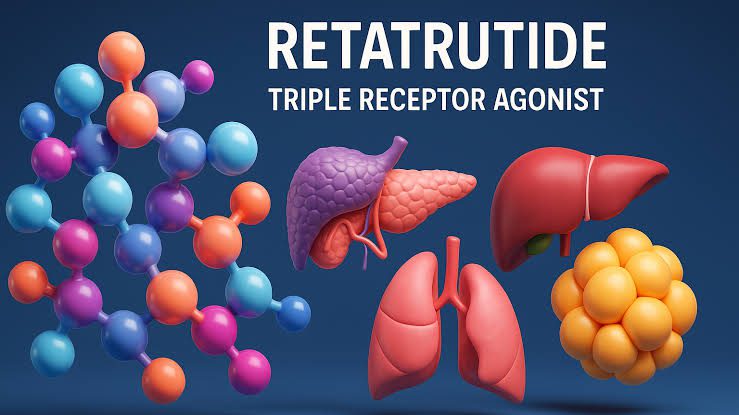
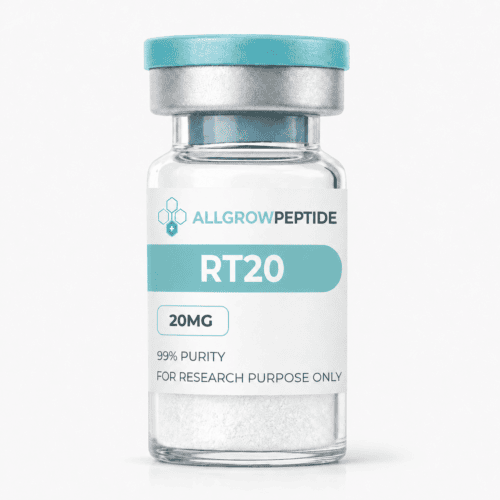
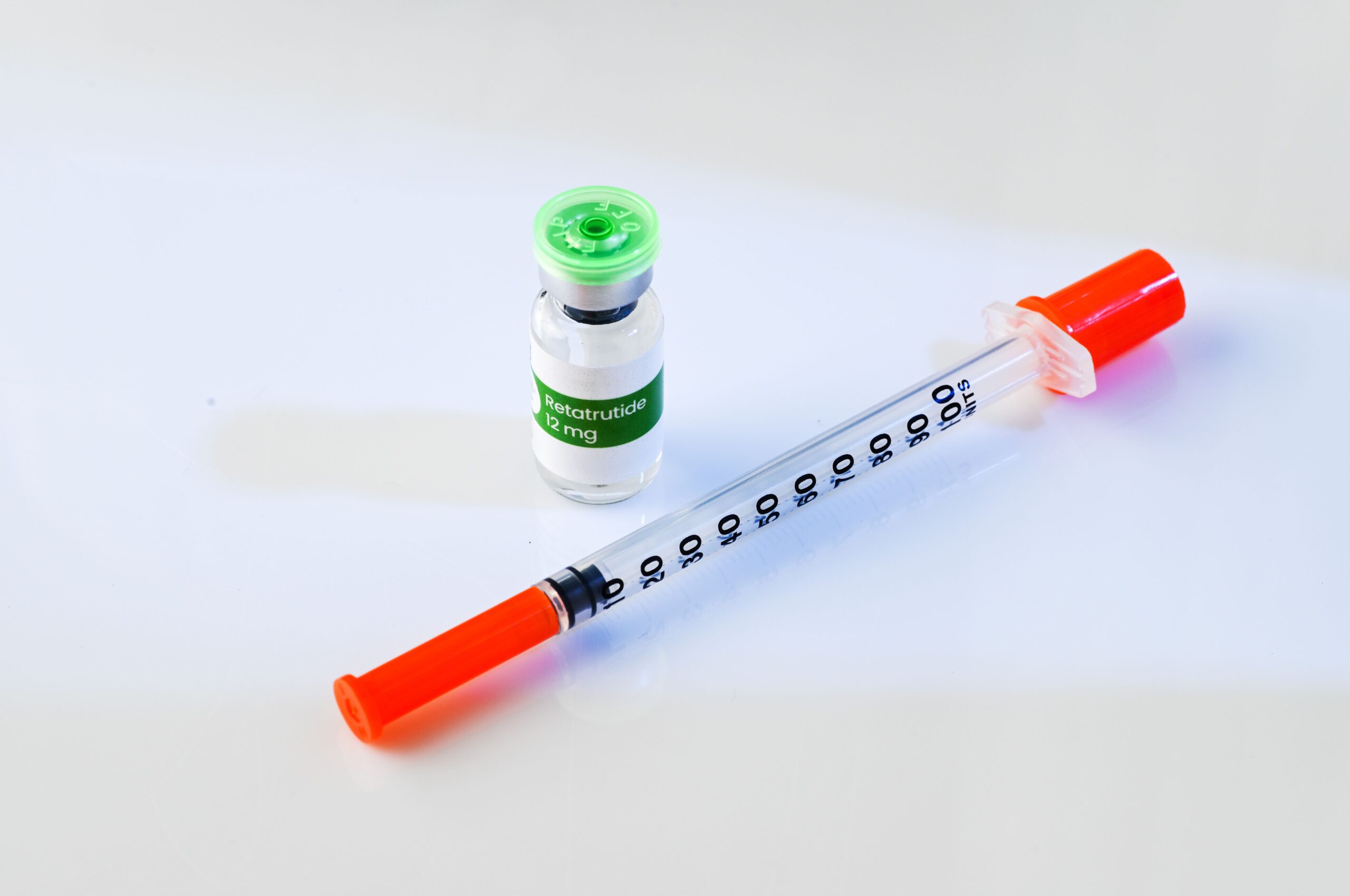
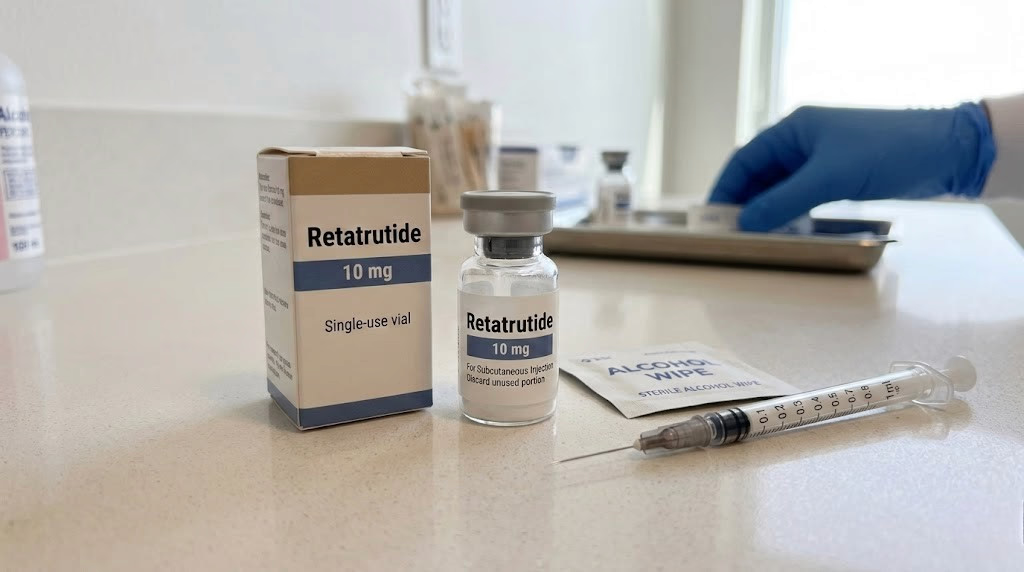
Retatrutide 20mg is a research-format presentation of LY3437943, a modified peptide developed for triple-receptor agonist research.
Retatrutide interacts with three metabolic receptor systems: GIPR, GLP-1R, and GCGR. Therefore, researchers use it to investigate multi-receptor signaling and metabolic pathway integration.
The 20mg designation refers to nominal material content, not a recommended human dose. That distinction matters.
Published clinical studies use defined investigational protocols. They do not establish a commercial “Retatrutide 20mg dose.”
Retatrutide remains an investigational compound. It has not received FDA approval for treatment of any condition. In addition, the FDA states that retatrutide cannot currently be used in compounding under U.S. federal law.
What Is Retatrutide 20mg?
Retatrutide, also known as LY3437943, belongs to a newer class of multi-receptor peptide agonists.
Unlike compounds that target one incretin pathway, retatrutide combines activity at three receptors:
- glucose-dependent insulinotropic polypeptide receptor, or GIPR
- glucagon-like peptide-1 receptor, or GLP-1R
- glucagon receptor, or GCGR
Coskun and colleagues described LY3437943 as a triple glucagon, GIP, and GLP-1 receptor agonist in Cell Metabolism in 2022. Their work covered both preclinical characterization and early clinical proof of concept.
PubChem and KEGG list retatrutide as a modified peptide with the molecular formula C221H342N46O68. KEGG reports a molecular weight of approximately 4731.34 g/mol.
The 20mg format simply creates a defined research quantity for laboratory procurement.
Retatrutide 20mg Product Specifications
Use batch-specific analytical results whenever possible. Do not replace actual batch data with generic marketing claims.
| Attribute | Research Specification |
|---|---|
| Compound | Retatrutide |
| Research Code | LY3437943 |
| Format | Research peptide material |
| Nominal Quantity | 20mg |
| Molecular Formula | C221H342N46O68 |
| Molecular Weight | Approx. 4731.34 g/mol |
| Primary Research Targets | GIPR, GLP-1R and GCGR |
| Purity | Report the actual batch-specific HPLC result |
| Identity Testing | Mass spectrometry recommended for batch verification |
| Documentation | Batch-specific COA where available |
| Intended Use | Laboratory and analytical research only |
Reference: Molecular formula and molecular-weight data are reported by PubChem and KEGG.

How Does Retatrutide Work in Research Models?
Retatrutide attracts research interest because it combines three receptor activities within one molecule.
GLP-1 Receptor Activity
GLP-1 receptor signaling plays an established role in glucose-dependent metabolic regulation.
Therefore, researchers often study this pathway when examining insulin signaling, nutrient response, and metabolic control.
GIP Receptor Activity
GIPR adds a second incretin-related pathway.
Consequently, dual and triple agonist research can explore interactions that single-receptor models cannot reproduce.
Glucagon Receptor Activity
GCGR adds another metabolic signaling component.
This feature makes retatrutide biologically distinct from dual GIP/GLP-1 agonists.
Coskun et al. characterized LY3437943 as a triple agonist during its discovery program.
Therefore, the scientific value of retatrutide does not come from GLP-1 activity alone.
Instead, its research value comes from the interaction among all three pathways.
Retatrutide vs Tirzepatide: What Is the Scientific Difference?
Retatrutide and tirzepatide often appear together in search results.
However, they are not the same molecule.
Tirzepatide targets GIPR and GLP-1R.
Retatrutide adds GCGR activity to those two receptor pathways.
ClinicalTrials.gov also lists a Phase 3 trial designed to compare retatrutide directly with tirzepatide in adults with obesity.
| Feature | Retatrutide | Tirzepatide |
|---|---|---|
| Research Code | LY3437943 | LY3298176 |
| GIPR Activity | Yes | Yes |
| GLP-1R Activity | Yes | Yes |
| GCGR Activity | Yes | No |
| Receptor Profile | Triple agonist | Dual agonist |
| Current Retatrutide Status | Investigational | Not applicable |
This difference supports keywords such as retatrutide vs tirzepatide and tirzepatide vs retatrutide.
However, comparison content should remain scientific.
It should not imply that an investigational compound represents an approved alternative.
Retatrutide Clinical Research: Published Reference Data
Human clinical data provide useful scientific context.
However, these results do not turn a 20mg research vial into a clinical product.
That distinction is essential.
Phase 2 Obesity Research
Jastreboff et al. published a randomized Phase 2 trial in the New England Journal of Medicine.
The study included adults with obesity or overweight.
At 48 weeks, the 12mg investigational group showed a mean body-weight reduction of approximately 24.2%.
The placebo group showed about 2.1% reduction.
The study reported a dose-dependent response across treatment groups.
Again, these figures describe controlled clinical research.
They are not dosing instructions.
Phase 3 TRIUMPH-1 Data
Lilly announced Phase 3 TRIUMPH-1 topline results in May 2026.
At 80 weeks, the reported mean body-weight changes were:
| Clinical Trial Group | Mean Weight Change at 80 Weeks |
|---|---|
| Retatrutide 4mg | -19.0% |
| Retatrutide 9mg | -25.9% |
| Retatrutide 12mg | -28.3% |
| Placebo | -2.2% |
The study population had an average baseline body weight of about 112.7kg and a mean BMI of 40.0 kg/m².
Moreover, 45.3% of participants in the 12mg group achieved at least 30% weight reduction at week 80.
These results came from a controlled Phase 3 research program.
They should not be interpreted as instructions for laboratory products.
Retatrutide 20mg Does Not Mean a 20mg Clinical Dose
This point deserves its own section.
Searches for Retatrutide 20mg dosing often mix two different concepts.
The first concept is vial or catalog quantity.
The second is an investigational clinical dose.
They are not interchangeable.
Several research suppliers currently use 20mg as a catalog quantity. For example, research listings from Pura Peptides and NovoPro Labs include a 20mg presentation.
By contrast, clinical trials use protocol-defined treatment groups.
TRIUMPH-1 evaluated 4mg, 9mg, and 12mg groups.
Therefore:
| Term | What It Means |
|---|---|
| Retatrutide 20mg | A nominal research-material quantity or catalog presentation |
| Retatrutide 12mg in TRIUMPH-1 | A protocol-defined investigational clinical study group |
| LY3437943 | The research and development identifier for retatrutide |

Retatrutide 20mg COA: What Should Researchers Check?
A useful Retatrutide 20mg COA should connect directly to the supplied batch.
Therefore, researchers should look beyond a single purity percentage.
Check the following items:
- Product or compound name
- Batch or lot number
- Test date
- HPLC result
- HPLC chromatogram
- Mass-spectrometry result
- Nominal or measured material quantity
- Analyst or laboratory identification
- Testing method
- Release or approval status
Third-party analytical laboratories commonly use reversed-phase HPLC for purity assessment and ESI-MS for identity confirmation in retatrutide testing.
A downloadable COA also helps research teams maintain procurement records.
However, a COA should match the actual lot.
A generic certificate provides much less traceability.
Retatrutide 20mg HPLC and Mass Spectrometry
HPLC and mass spectrometry answer different questions.
That matters during peptide qualification.
| Test | Primary Question | Important Limitation |
|---|---|---|
| HPLC | How much of the detected material belongs to the main chromatographic component? | It does not independently confirm molecular identity. |
| Mass Spectrometry | Does the measured molecular mass support the expected identity? | It does not replace a complete purity assessment. |
| COA Review | Does the batch documentation match the supplied lot? | A COA depends on the quality of the underlying tests. |
| Content Verification | How much target material does the sample contain? | Nominal vial quantity alone cannot answer this question. |
Therefore, “99% purity” and “20mg content” are not the same measurement.
For research procurement, both identity and quantity deserve attention.
Retatrutide 20mg Price: What Affects Research Procurement Cost?
Researchers searching for Retatrutide 20mg price often compare more than the displayed unit price.
A low price does not describe analytical quality.
Therefore, procurement teams should compare the entire documentation package.
Common cost factors include:
| Cost Factor | Why It Matters |
|---|---|
| Nominal Quantity | 20mg requires more material than smaller catalog formats. |
| Purification Target | Higher purification requirements may increase processing effort. |
| Analytical Testing | HPLC, MS and additional verification add laboratory cost. |
| Batch Documentation | Traceable COAs require controlled testing and record management. |
| Packaging | Research packaging can vary by project and material requirements. |
| Order Quantity | Single-unit and bulk research orders may have different cost structures. |
Therefore, compare cost per documented research batch, not price alone.
This approach better serves laboratories, biotechnology companies, CROs, and academic research groups.
How to Evaluate a Retatrutide 20mg Supplier
A credible Retatrutide 20mg supplier should support scientific verification.
Start with documentation.
Then evaluate traceability.
1. Request the Lot Number
The lot number should connect the physical material to its COA.
2. Review the HPLC Chromatogram
Do not rely only on a printed purity percentage.
Instead, review the underlying chromatographic data.
3. Check Mass-Spectrometry Data
Retatrutide has a reported molecular weight near 4731.34 g/mol.
Therefore, MS data should support the expected molecular identity.
4. Separate Purity From Quantity
A sample can show high chromatographic purity without containing the exact nominal mass stated on a label.
Therefore, treat these as separate quality parameters.
5. Review Supplier Traceability
Keep batch records, test dates, technical documents, and purchase records together.
This process makes repeat research easier.
It also simplifies supplier qualification.
Research Procurement Case Example
Consider a biotechnology laboratory that needs a Retatrutide 20mg research peptide for analytical method development.
The procurement team receives two quotations.
Supplier A lists only:
Retatrutide 20mg — 99% purity.
Supplier B provides:
- batch number
- HPLC result
- chromatogram
- mass-spectrometry data
- test date
- batch-specific COA
The team should not choose solely by headline purity.
Instead, it should compare traceability and analytical evidence.
First, the team checks whether the batch number matches.
Next, it reviews the HPLC chromatogram.
Then, it compares the MS result with the expected molecular identity.
Finally, it archives the COA with the procurement record.
This workflow gives the laboratory a more defensible research record.
It also makes future batch comparisons easier.
Retatrutide 10mg vs 20mg: What Changes for Laboratory Procurement?
The primary difference is nominal material quantity.
The molecule itself does not become a different compound.
| Research Format | Nominal Quantity | Typical Procurement Consideration |
|---|---|---|
| Retatrutide 10mg | 10mg | Smaller material requirement |
| Retatrutide 20mg | 20mg | Mid-size research requirement |
| Larger Research Format | Project dependent | Batch consistency and documentation become increasingly important |
Therefore, Retatrutide 10mg vs 20mg should not become a clinical-dose comparison.
Instead, the comparison should focus on laboratory material requirements.
Current Regulatory Status of Retatrutide
Retatrutide remains investigational.
Lilly continues to study the compound through its Phase 3 clinical program. ClinicalTrials.gov also lists multiple ongoing or completed Phase 3 studies.
More importantly, FDA states that retatrutide:
- is not a component of an FDA-approved drug
- has not been found safe and effective for any condition
- cannot currently be used in compounding under federal law
FDA also warns against products falsely marketed as “research use only” when sellers actually intend them for human use.
Therefore, this page should maintain clear separation between laboratory research and medical use.
Frequently Asked Questions About Retatrutide 20mg
What is Retatrutide 20mg?
Retatrutide 20mg describes a research-material format containing a nominal 20mg quantity of retatrutide.
It does not describe an approved clinical dosage.
What is LY3437943?
LY3437943 is the development code associated with retatrutide.
Researchers can use both terms when searching scientific literature.
Is Retatrutide a GLP-1 peptide?
Retatrutide activates GLP-1 receptors.
However, it also targets GIP and glucagon receptors.
Therefore, researchers generally describe it as a triple GIPR/GLP-1R/GCGR agonist.
What is the molecular weight of Retatrutide?
KEGG reports a molecular weight of approximately 4731.34 g/mol.
What is the molecular formula?
The reported molecular formula is C221H342N46O68.
What should a Retatrutide 20mg COA include?
Look for batch identification, HPLC data, MS identity information, test date, and analytical documentation.
Batch-specific records provide stronger traceability.
Does 99% HPLC purity mean the vial contains exactly 20mg?
No.
HPLC purity and nominal material quantity measure different properties.
Therefore, researchers should evaluate them separately.
What is Retatrutide 20mg used for?
A research-grade Retatrutide 20mg product should support laboratory, analytical, or preclinical research only.
It should not be marketed for personal or therapeutic use.
Is Retatrutide FDA approved?
No.
FDA states that retatrutide is not a component of an FDA-approved drug and has not been found safe and effective for any condition.
Can Retatrutide be compounded in the United States?
FDA states that retatrutide cannot currently be used in compounding under federal law.
Research Quality Checklist
Before accepting a Retatrutide 20mg research batch, confirm:
- Lot number matches the COA
- HPLC data belongs to the same batch
- Mass-spectrometry data supports identity
- Purity values come from actual testing
- Nominal quantity is clearly stated
- Test date is available
- Supplier contact information is traceable
- Documentation remains available after delivery
- Intended use remains laboratory research only
A transparent data package offers more value than a headline purity claim.
| No. | Authors / Organization | Reference | Key Data / Information | DOI / Study ID |
|---|---|---|---|---|
| 1 | Coskun T, Urva S, Roell WC, et al. |
LY3437943, a novel triple glucagon, GIP, and GLP-1 receptor agonist for glycemic control and weight loss: From discovery to clinical proof of concept. Cell Metabolism. 2022;34(9):1234–1247.e9. | Describes the discovery and early clinical development of LY3437943, later known as retatrutide, as a triple GCGR, GIPR, and GLP-1R agonist. | 10.1016/j.cmet.2022.07.013 |
| 2 | Jastreboff AM, Kaplan LM, Frías JP, et al. |
Triple-Hormone-Receptor Agonist Retatrutide for Obesity: A Phase 2 Trial. New England Journal of Medicine. 2023;389:514–526. | Reports Phase 2 clinical data evaluating retatrutide in adults with obesity. | 10.1056/NEJMoa2301972 |
| 3 | Rosenstock J, et al. |
Retatrutide, a GIP, GLP-1 and glucagon receptor agonist, for people with type 2 diabetes. The Lancet. 2023. | Evaluates retatrutide as a triple receptor agonist in people with type 2 diabetes. | Clinical publication |
| 4 | Eli Lilly and Company |
TRIUMPH-1 Phase 3 topline results. May 21, 2026. | Reported 80-week mean weight changes of -19.0%, -25.9%, and -28.3% for the 4 mg, 9 mg, and 12 mg investigational groups. | TRIUMPH-1 Phase 3 |
| 5 | ClinicalTrials.gov | Phase 3 study of LY3437943 in participants with obesity and established cardiovascular disease. | Clinical study investigating retatrutide in participants with obesity and established cardiovascular disease. | NCT05882045 |
| 6 | ClinicalTrials.gov | Phase 3 study comparing retatrutide and tirzepatide in adults with obesity. | Head-to-head Phase 3 research comparing retatrutide with tirzepatide in adults with obesity. | NCT06662383 |
| 7 | PubChem, National Library of Medicine | Retatrutide compound record. |
Molecular formula: C221H342N46O68. Molecular weight: approximately 4731 g/mol. | PubChem compound record |
| 8 | KEGG DRUG | Retatrutide molecular and receptor information. |
Molecular weight: 4731.34. Reported targets include GCGR, GIPR, and GLP1R. | D12430 |
| 9 | U.S. Food and Drug Administration |
FDA's Concerns with Unapproved GLP-1 Drugs Used for Weight Loss. Updated 2026. | FDA states that retatrutide cannot currently be used in compounding under federal law. | FDA regulatory guidance |
Request Retatrutide 20mg Research Information
Need more information about Retatrutide 20mg (LY3437943) for your research project? Submit the form below to request current batch availability, pricing, batch-specific COA, HPLC/MS analytical data, purity information, packaging options, and bulk research quantities. Please include your required quantity and documentation needs. Our team will review your request and provide the relevant technical and sourcing information.