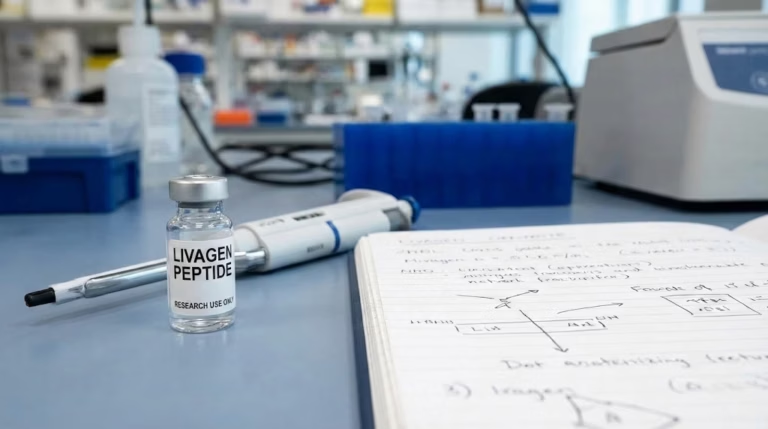
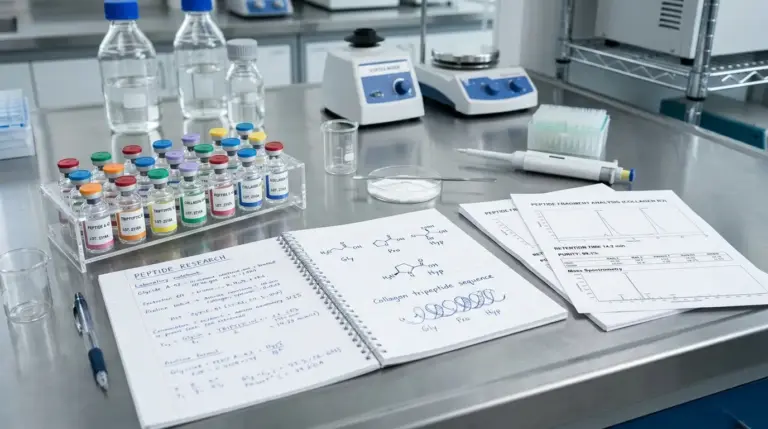
Recovery peptide procurement creates several technical challenges that do not arise when a laboratory buys one well-characterized small molecule. A peptide may exist as a free acid, amide, acetate, TFA salt, oxidized form or disulfide-containing structure. Meanwhile, a peptide blend introduces more than one target molecule into the same container.
Ancillary materials add another level of variation. Water, buffers, vials, stoppers, filters, tubes and labels can influence sample stability, traceability and experimental reproducibility. Custom peptide packaging must therefore protect the material while communicating the exact identity of what the container holds.
This article examines recovery-category peptides, peptide blends, laboratory ancillaries and customized packaging as one connected sourcing system. It focuses on research documentation rather than commercial claims.
What Is Multi-Component Peptide Procurement?
Multi-component peptide procurement is the coordinated purchase and control of:
One or more peptide active materials
Required analytical documentation
Reconstitution or assay ancillaries
Primary containers and closures
Secondary packaging
Labels and batch records
Shipping and storage systems
The aim is not simply to receive a vial. Instead, the aim is to preserve molecular identity and traceability from manufacturing through laboratory use.
Definition and Molecular Classification
Recovery is a research application category rather than a molecular class. It may include short synthetic peptides, protein fragments, copper-binding peptides, cytokine-related sequences, or blends containing several structurally unrelated molecules.
BPC-157, for example, is a 15-residue synthetic peptide with a reported molecular formula of C₆₂H₉₈N₁₆O₂₂ and a molecular weight of approximately 1,419.5 g/mol.
By contrast, thymosin beta-4 is a longer naturally occurring peptide. Commercial terms such as “TB-500” should not substitute for an exact sequence specification because a product label may not communicate whether the material is full-length thymosin beta-4, a fragment, an acetylated fragment or another related form.
Critical Scientific Distinction: A peptide blend is a physical mixture of separate molecular species. It is not automatically one new covalent molecule. Consequently, the blend has a component ratio and total content, but it does not have one simple molecular formula unless the components have been chemically joined.
Molecular Structure and Blend Composition
A blend specification should identify each component separately.
For every peptide, request:
Sequence
Molecular formula
Theoretical mass
Terminal groups
Modification
Salt or counterion
Individual target quantity
Individual purity
Blend ratio
Total fill quantity
For example, a hypothetical two-component blend might contain:
Peptide A: 10 mg target
Peptide B: 10 mg target
Total nominal peptide fill: 20 mg
Intended mass ratio: 1:1
However, a 1:1 mass ratio does not equal a 1:1 molar ratio when the molecular weights differ. If Peptide A has a molecular weight of 1,400 g/mol and Peptide B has a molecular weight of 900 g/mol, equal mass produces fewer moles of Peptide A.
Therefore, the buyer must decide whether the scientific design requires a mass ratio or a molar ratio.
Biological Research Roles
Tendon and Fibroblast Models
BPC-157 has appeared in tendon-fibroblast and animal injury studies. One study reported enhanced tendon-fibroblast outgrowth and migration under its experimental conditions. A later investigation found dose- and time-dependent changes in growth-hormone-receptor expression in rat tendon fibroblasts and examined downstream JAK2 signaling. These findings remain preclinical and do not establish human treatment protocols.
Cell Migration and Cytoskeletal Research
Thymosin beta-4 binds actin and has been studied in cell migration, survival and repair-related pathways. An original cardiac-injury study connected thymosin beta-4 with integrin-linked kinase signaling and cardiomyocyte migration and survival.
Extracellular Matrix Models
GHK-Cu may appear in both anti-aging and recovery categories because laboratories study it in fibroblast, collagen and matrix-remodeling systems. The overlap illustrates why website categories should not be treated as mutually exclusive scientific classes.
Peptide Blend Research
A blend can help investigators examine whether two materials generate additive, antagonistic or interactive effects. However, a single blend-only arm cannot identify which component caused the result. A properly controlled study should test each component separately as well as the combination.
Why These Materials Are Studied
Common research uses include:
Tendon-fibroblast migration assays
Collagen-expression measurements
Scratch-wound cell assays
Cytoskeletal imaging
Receptor and pathway analysis
Oxidative-stress models
Protein-expression studies
Combination-response experiments
Analytical method development
Stability studies
A sourcing plan should match the biological endpoint. For example, a cell-culture project may need low-endotoxin materials, whereas a chromatographic method-development project may prioritize reference standards and impurity samples.
Major Research Mechanisms
Actin and Cell Migration
Actin-binding peptides can influence cytoskeletal organization in experimental systems. Researchers may measure migration distance, actin polymerization, focal-adhesion proteins or integrin-associated signaling.
Growth-Hormone-Receptor-Associated Signaling
In tendon-fibroblast research, investigators have measured growth-hormone-receptor expression, JAK2 phosphorylation and proliferation markers after peptide exposure. These assays examine pathway behavior; they do not provide clinical proof.
Copper and Matrix Regulation
Copper-binding peptides may affect matrix-related gene expression and enzyme activity. However, free copper, peptide-only controls and copper-complex controls may all be necessary to determine which component drives an observed response.
Recovery Peptides and Peptide Research
Diagnostic and assay peptides
Recovery-category materials often share laboratory endpoints rather than structural similarity. A 15-residue peptide, a 7-residue fragment and a copper tripeptide may all appear in a migration or matrix experiment, yet each requires different analytical and handling controls.
The procurement record should therefore organize products by both:
Research application
Molecular identity
The first supports experiment planning. The second supports scientific accuracy.
Procurement Comparison Table
Procurement Element
Single Recovery Peptide
Peptide Blend
Ancillary or Packaging Material
Primary identity
One exact sequence
Every component sequence
Material grade and specification
Molecular mass
One expected peptide mass
Separate mass for each component
Usually not peptide-related
Purity assessment
HPLC plus MS or LC-MS
Component-resolved method
Supplier material testing
Quantity control
Peptide content per vial
Individual content and ratio
Fill volume or component dimensions
Main risk
Wrong form or degradation
Ratio error or co-elution
Incompatibility or poor traceability
Packaging requirement
Protect one material
Preserve multi-component stability
Prevent mix-ups and contamination
Stability and Laboratory Handling
A blend may be less stable than its individual components. One peptide can alter pH, ionic environment, moisture uptake or physical structure for another.
Important considerations include:
Oxidation-prone residues
Disulfide exchange
Metal–peptide interactions
Hydrophobic aggregation
Adsorption to glass or plastic
Light-sensitive labels
Residual moisture
Counterion differences
Freeze–thaw exposure
The supplier should avoid assuming that stability data for each peptide alone prove stability after blending.
Custom Peptide Packaging
Custom packaging serves both protective and informational functions.
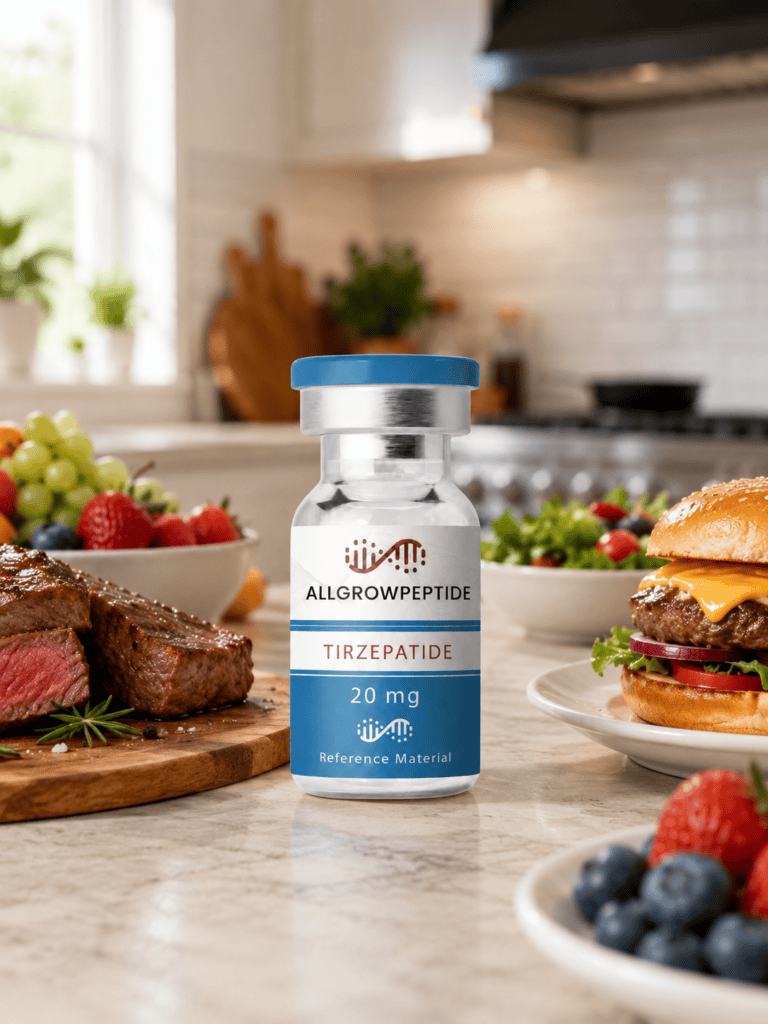
A research-use vial label should identify:
Product name
Exact sequence or reference code
Batch number
Nominal quantity
Storage condition
Research-use statement
Manufacturer or responsible supplier
Scannable batch or inventory identifier where appropriate
Secondary packaging may include cartons, inserts, tamper-evident seals and shipping protection.
ISO 15378 applies quality-management and GMP-related principles to primary packaging materials for medicinal products. Research-use suppliers may use it as a benchmark for packaging control, although research materials and medicinal products do not automatically fall under identical regulatory requirements.
Maintaining Sample Integrity
Freeze the purchase specification before production. Include sequences, ratios, quantities and packaging details.
Approve label artwork against the specification. Do not rely only on product nicknames.
Match the COA to the physical batch. Batch numbers must agree across vial, carton and documentation.
Inspect the container closure. Look for damage, loose closures or evidence of moisture entry.
Equilibrate sealed containers before opening. This reduces condensation.
Reconstitute each new blend cautiously. Observe precipitation or incomplete dissolution.
Use master and working aliquots. Limit repeat thawing.
Retain a reference vial when possible. It can support later investigation of unexpected results.
Analytical and Quality Considerations
Blend testing must resolve each component.
A total ultraviolet signal cannot automatically establish the ratio because peptides may have different extinction coefficients. Likewise, one broad HPLC peak cannot prove that all components are present at the correct levels.
A stronger approach may combine:
Component-specific LC-MS
Chromatographic purity
Calibrated quantitative analysis
Peptide-content testing
Water determination
Counterion analysis
Appearance and reconstitution testing
Stability-indicating methods
Container-closure review
USP’s work on synthetic peptide reference standards emphasizes highly characterized materials, peptide impurities, analytical testing, handling and storage.
Practical Case: Qualifying a Two-Peptide Recovery Blend
Assume a laboratory wants a blend containing Peptide A and Peptide B.
The project should include five samples:
Peptide A alone
Peptide B alone
A+B blend
Vehicle control
Positive assay control
The supplier should test A and B separately before blending. After blending, the laboratory should confirm:
Presence of both masses
Intended mass or molar ratio
No unexpected new major impurity
Acceptable dissolution
Consistent fill across selected vials
This design separates manufacturing quality from biological interaction.
Frequently Asked Questions
What is a recovery peptide?
Recovery peptide is a catalog or research-category term for peptides investigated in tissue, matrix, migration, inflammatory or repair-related models. It is not a formal chemical class. Each material must be identified by its exact amino acid sequence and molecular form.
Is a peptide blend one molecule?
Usually not. A blend normally contains two or more separate peptide molecules in the same vial. Each component retains its own formula and molecular weight. Only a covalently joined conjugate would form one new defined molecule.
Why is blend ratio important?
The ratio determines how much of each component enters the experiment. A mass ratio and a molar ratio can produce different molecular proportions when component molecular weights differ. The research protocol should state which ratio is required.
Can HPLC confirm the composition of a blend?
HPLC can separate and estimate components when the method provides adequate resolution. However, co-elution and different detector responses can distort interpretation. LC-MS and calibrated component-specific methods may be necessary to confirm identity and ratio.
What should custom peptide packaging include?
It should include product identity, batch number, quantity, storage instructions, supplier information and research-use labeling. The label should avoid unsupported biological claims and should remain consistent with the sequence and COA.
Are ancillaries part of peptide quality?
They can affect practical quality. Solvent composition, water quality, filters, vials and closures may influence solubility, adsorption, oxidation or contamination. Therefore, ancillary specifications should form part of method and batch records.
Can two recovery peptides be mixed without a compatibility study?
Mixing is technically possible, but compatibility should not be assumed. The combination may change pH, solubility, oxidation, aggregation or chromatographic behavior. A pilot blend and stability-indicating analysis can identify obvious problems.
Does a correct total vial weight prove blend accuracy?
No. Total weight cannot show how much of each peptide is present. It may also include water, counterions and residual buffer components. Component-specific quantitative testing provides stronger evidence.
Why retain a reference vial?
A retained vial allows the laboratory to investigate later discrepancies. If a biological result changes, the reference can be retested for degradation, identity or content without relying on an already opened working sample.
Are preclinical recovery findings equivalent to clinical evidence?
No. Cell-culture and animal studies help researchers investigate mechanisms and generate hypotheses. They do not establish clinical efficacy, safe human use or an appropriate human administration protocol.
Conclusion
Recovery peptides, peptide blends, ancillaries and custom packaging form one interconnected procurement system. Sequence accuracy alone is insufficient when component ratio, solvent compatibility, container protection or label traceability fails.
A sound sourcing program defines every component, tests each peptide separately, confirms the finished blend and maintains consistent documentation across the vial, COA, carton and laboratory record.
For research materials: For Research Use Only. Not for human use.