


Peptide Quality Control from Material Review to Batch Release
首页 » Batch Traceability
Peptide batch traceability connects a finished vial with its materials, production records, analytical results, packaging information, storage history, and shipment documents. Therefore, when a quality question is raised, the affected lot can be identified and reviewed without relying only on the product name or sales invoice.

What Does Batch Traceability Mean?
A product name may be shared by many manufacturing batches. Consequently, a unique lot or batch identifier is required so that one production group can be distinguished from another.
The GS1 Global Traceability Standard is intended to support the design and implementation of traceability systems. Meanwhile, ICH Q7 recommends that material identities, supplier information, receipt numbers, test results, material use, batch production records, packaging records, and distribution data be retained.
Traceability Data Map
| Stage | Traceability Information |
|---|---|
| Material Receipt | Material name, supplier, lot, quantity and receipt date |
| Production | Batch number, instructions, equipment and operators |
| Purification | Process reference and collected fraction records |
| Analytical Testing | Sample ID, method, result and analyst |
| Batch Release | Specification review and approval status |
| Packaging | Vial, label, quantity, packaging lot and inspection |
| Storage | Location and applicable storage conditions |
| Shipment | Customer order, packing list, carrier and tracking reference |
End-to-End Traceability for Every Peptide Batch
Reliable peptide quality begins with clear, connected records. Each batch should carry a unique identification number that links raw materials, synthesis activities, purification steps, analytical testing, lyophilization, packaging, storage, and shipment information.
Backward traceability allows the quality team to start with a finished peptide vial and review every stage behind it. This includes the materials used, production records, equipment information, test results, packaging details, and release documentation.
Forward traceability follows a raw material or production batch through manufacturing and distribution. It connects the batch with finished products, inventory records, customer orders, and shipment details.
Together, these two directions create a more complete batch history. As a result, manufacturers can investigate deviations more efficiently, verify documentation, respond to customer questions, and maintain stronger control throughout the peptide supply chain.
Recommended Batch Identification
| Identification Level | Example | Purpose |
|---|---|---|
| Product Code | GHKCU-100 | Identifies product and specification |
| Batch Number | GHK260715A | Identifies a production batch |
| Vial or Pack Code | Optional serial code | Supports individual-pack identification |
| Order Reference | PO or invoice number | Links the batch to a customer order |
| Shipment Reference | Tracking or air-waybill number | Links the order to delivery records |

Why Traceability Matters to Buyers
Traceability allows documentation to be verified more efficiently. Moreover, it supports complaint investigation, inventory control, repeat-order comparison, deviation review, and targeted recall actions where necessary.
ICH Q7 states that a system should be available through which the distribution of each API or intermediate batch can be readily determined.
Frequently Asked Questions
Is a QR code required for batch traceability?
No. A QR code may improve access to records, but traceability depends on the underlying controlled data.
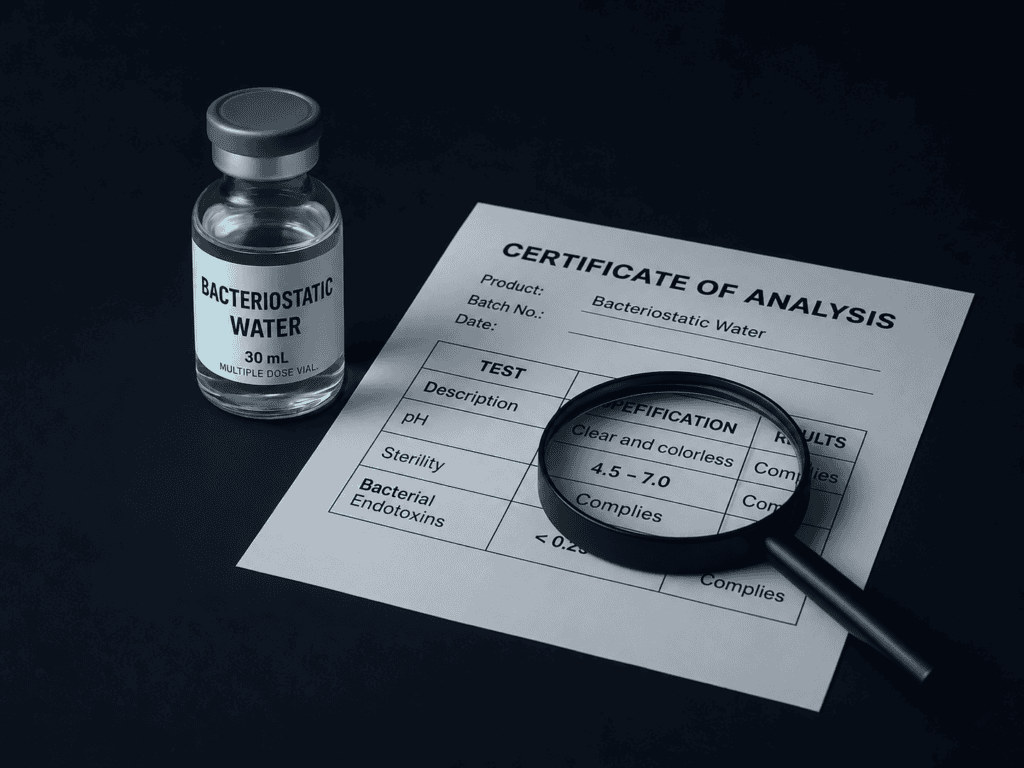
Can two batches use the same COA?
No. A batch-specific COA should correspond to one identified batch.
Should repeat orders use the same batch number?
No. A newly produced batch should normally receive a new identifier.
Can traceability continue after international shipment?
Yes, when batch records are linked to invoices, packing lists, carrier details, and customer-order information.
Verify a Peptide Batch
Provide the product name and lot number to request available batch documentation.