


Diagnostic and Assay Peptides for Research
Diagnostic and assay peptides support method development, immunoassay research, epitope mapping, antibody evaluation, binding studies, and analytical workflows.
However, the peptide sequence alone does not determine assay performance.
Purity, label position, terminal structure, linker design, conjugation method, solubility, and supplied quantity can all influence the final research result.
Therefore, ALLGROWPEPTIDE reviews each project according to the intended assay format and technical specification.
Peptides Designed Around the Assay
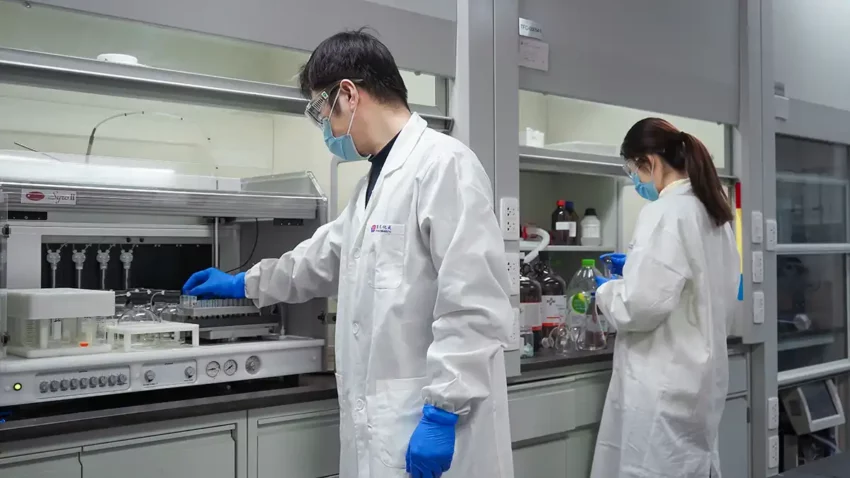
An effective assay peptide should match the experimental method.
For example, an immobilized peptide may require a spacer that separates the sequence from the assay surface. Meanwhile, a detection peptide may require a fluorescent or affinity label at a position that does not block the target region.
Therefore, the following details should be reviewed before production:
- target sequence;
- species or isoform;
- terminal groups;
- required purity;
- assay format;
- label or conjugate;
- attachment position;
- linker length;
- solubility requirement;
- quantity per vial;
- analytical documentation.
Research Applications for Assay Peptides
| Research Application | Possible Peptide Format | Key Design Consideration |
|---|---|---|
| ELISA Method Development | Unlabeled, biotinylated or carrier-conjugated peptide | Epitope exposure, purity and coating behaviour |
| Epitope Mapping | Overlapping peptide library | Sequence coverage, overlap and plate format |
| Antibody Evaluation | Target peptide and related control sequence | Specificity and sequence homology |
| Binding Research | High-purity peptide with optional label | Concentration accuracy and label position |
| Enzyme Assay Development | Substrate peptide with fluorescent or quencher group | Cleavage position and signal design |
| Research Calibration Curve | Defined peptide reference material | Purity, content and batch consistency |
ELISA and Immunoassay Development
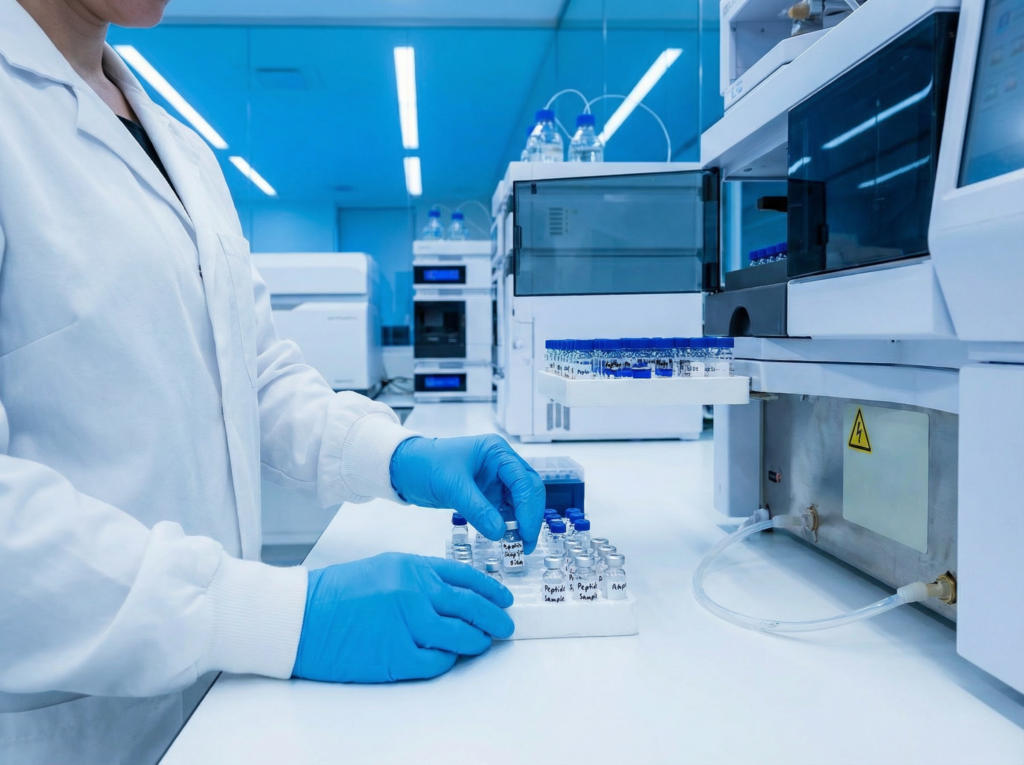
Peptides can support immunoassay research as antigens, competitors, coating materials, controls, or labeled detection reagents.
However, researchers should select the sequence carefully.
A highly hydrophobic sequence may coat a surface differently from a charged peptide. Likewise, a label or carrier protein may alter accessibility.
Therefore, the design process should consider both the biological target and the physical assay format.
GenScript’s published purity guidance associates antibody-generation and testing projects with purity above 70%, although higher purity may become appropriate when background, specificity, or quantitative performance matters.
Epitope Mapping Peptides
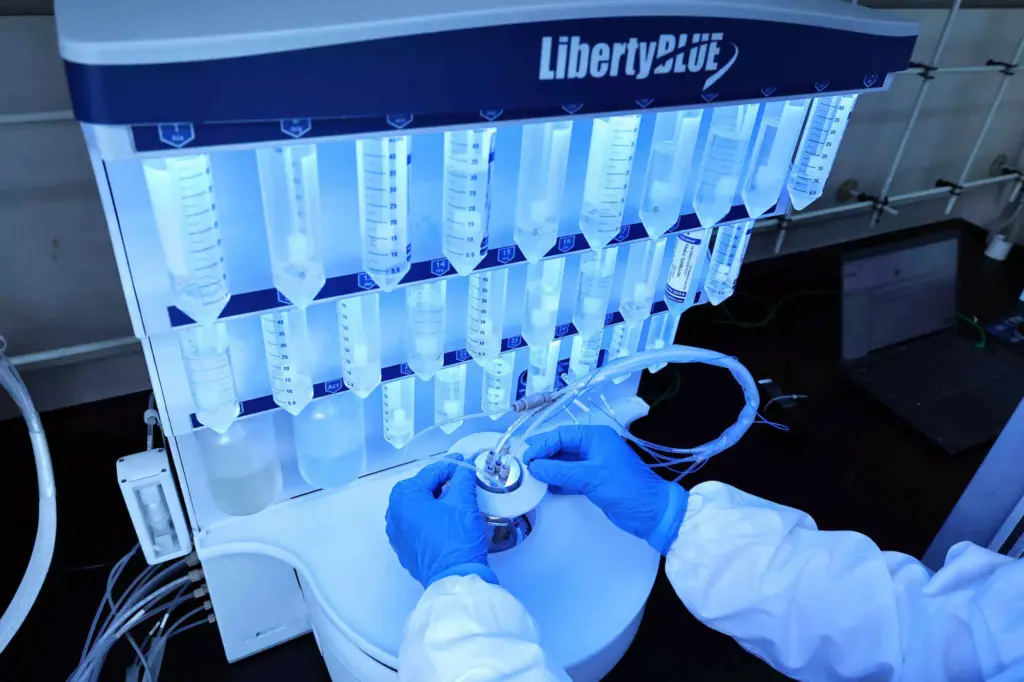
Overlapping peptide libraries help researchers examine how antibodies or binding partners respond to different regions of a longer target sequence.
First, the target sequence is divided into shorter peptides. Next, a defined overlap is applied between adjacent sequences. Finally, the peptides are organized into individual vials, tubes, plates, or pools.
Consequently, researchers can compare responses across the sequence.
The required purity depends on the assay. For example, GenScript’s published library guidance lists crude material for some epitope-mapping and biomarker-discovery projects, while higher-purity options are associated with quantitative or development-focused applications.
Labels, Linkers and Conjugates
| Modification | Example | Possible Research Purpose |
|---|---|---|
| Affinity Label | Biotin | Capture, immobilization or pull-down research |
| Fluorescent Label | FAM, FITC, TAMRA, Cy3 or Cy5 | Detection, imaging or signal measurement |
| Carrier Conjugation | KLH, BSA or OVA | Antibody-related research |
| Spacer | Ahx or PEG linker | Separate the sequence from a surface or label |
| Reactive Handle | Azide, alkyne, cysteine or maleimide-compatible group | Controlled conjugation research |
| Enzyme-Substrate Label | Fluorophore and quencher pair | Protease or enzyme assay development |
Quality and Analytical Documentation
The analytical package should match the research purpose.
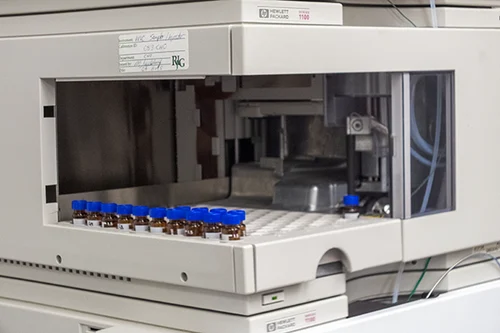
For routine projects, HPLC and mass spectrometry may provide a suitable starting point. However, quantitative method-development projects may also require net peptide content, counterion testing, water analysis, or a defined quantity assessment.
| Quality Element | Purpose |
|---|---|
| HPLC Analysis | Evaluates chromatographic purity |
| Mass Spectrometry | Supports molecular identity |
| Net Peptide Content | Supports more accurate concentration preparation |
| Sequence Confirmation | Connects the supplied material with the approved design |
| Batch Identification | Links the peptide with analytical and packing records |
| Aliquot Information | Defines the quantity supplied per vial, tube or well |
From Assay Concept to Peptide Delivery
1. Define the assay
Provide the assay format, target, sequence region, label requirement, purity, and required quantity.
2. Review the peptide design
Next, our team evaluates sequence length, solubility, epitope exposure, terminal structure, and possible modifications.
3. Confirm the specification
The sequence, label position, linker, quantity, purity, testing, and packaging are then confirmed.
4. Produce and purify the peptide
The peptide is synthesized according to the approved project plan. Afterward, an appropriate purification strategy is applied.
5. Complete analytical testing
HPLC, mass spectrometry, and agreed additional tests support batch evaluation.
6. Package the project
Finally, the peptide is supplied in the selected vial, tube, plate, pool, or custom packaging format.
Project Information Table
| Required Information | Example |
|---|---|
| Sequence | Full peptide sequence and target region |
| Assay Type | ELISA, binding, enzyme, epitope mapping or another method |
| Modification | Biotin, fluorophore, carrier or linker |
| Purity | Crude, ≥80%, ≥90%, ≥95% or ≥98% |
| Format | Individual vial, plate, pool or multi-peptide kit |
| Documentation | COA, HPLC, MS or additional testing |
Research-Use and Diagnostic Boundary
Research-grade assay peptides do not automatically qualify as validated in-vitro diagnostic products, medical devices, clinical calibrators, or approved diagnostic reagents.
Therefore, this page should not claim that ALLGROWPEPTIDE products can diagnose, prevent, monitor, or treat disease unless the exact finished product has completed the required regulatory and validation process.
Recommended statement:
Peptides described on this page are supplied for qualified laboratory research and assay-development purposes. They are not validated diagnostic devices and are not intended for direct clinical diagnosis.
Frequently Asked Questions
Can you produce peptides for ELISA development?
Custom peptides may be evaluated for ELISA and immunoassay research according to sequence, purity, label, quantity, and packaging requirements.
Can a peptide be supplied with biotin or a fluorescent dye?
Yes, selected labels and linker arrangements may be reviewed before quotation.
Can overlapping peptide libraries support epitope mapping?
Yes. Customers should provide the target sequence, peptide length, overlap, purity, and preferred format.
Which purity should I choose?
The answer depends on assay sensitivity, background tolerance, concentration requirements, and peptide format.
Are these peptides finished diagnostic products?
No. They are research materials unless separate regulatory and validation requirements have been completed.
Develop Peptides Around Your Assay
Send your target sequence, assay type, required purity, modification, quantity, and delivery format.
Our team will then review the technical requirements and prepare a project-specific proposal.