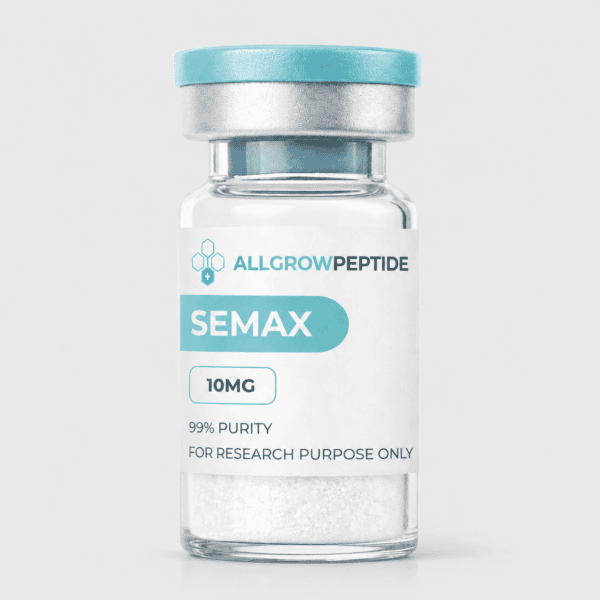
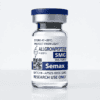
Buy Semax 10mg Exclusively at ALLGROWPEPTIDE
Semax is a synthetic research peptide derived from the modified ACTH 4–10 fragment.
Researchers study Semax in neuroscience and neuroendocrine research.
Controlled laboratory models examine its interactions with central nervous system signaling pathways.
These pathways influence cognitive processing, stress responses, and neurochemical regulation.
Scientists also investigate Semax because its modified structure may improve peptide stability.
The structure helps Semax resist rapid enzymatic degradation during controlled experiments.
This stability supports extended observation periods and detailed in-vitro studies.
Researchers examine its influence on neurotrophic factors, neurotransmitter balance, and synaptic activity.
These studies explore how neural networks adapt to environmental and cellular stress.
Researchers also investigate how neural systems maintain long-term functional stability.
Scientists study enkephalin regulation as another important Semax research area.
They examine how Semax may influence enkephalin degradation and neurological homeostasis.
BDNF Expression and Neurotrophic Factors
Researchers study Semax in models involving brain-derived neurotrophic factor, or BDNF.
They also examine dopaminergic and serotonergic signaling pathways.
Scientists investigate how these pathways influence stress adaptation and neurochemical balance.
Semax supports research into cognitive performance, memory formation, and emotional regulation.
Researchers also examine neuroprotective signaling within controlled cellular models.
These properties support comparisons with other neuroactive and nootropic research peptides.
Neurological databases document many related signaling pathways and experimental findings.
Synaptic Plasticity and Neuroadaptation
Researchers investigate Semax in models of synaptic activity and neural adaptation.
They examine how prolonged signaling may influence cognitive responses over time.
Scientists also study age-related changes in synaptic plasticity.
These models help researchers explore cellular resilience during neurological decline.
Longitudinal studies may reveal changes in neurochemical preservation and adaptive signaling.
Researchers must use suitable controls when interpreting these experimental responses.
Pharmacokinetic and Cellular Uptake Research
Semax has a modified structure that may support extended laboratory observation.
Researchers track its cellular uptake and resistance to enzymatic degradation.
They also measure signaling duration and peptide stability under controlled conditions.
Longer peptide stability may support extended receptor and pathway observations.
Researchers can use these models to examine progressive cognitive adaptation.
Scientists also study transport rates across cellular membranes.
These measurements support reproducible models of central nervous system communication.
Careful documentation improves consistency across multi-day experimental studies.
Lyophilized Semax 10mg Format
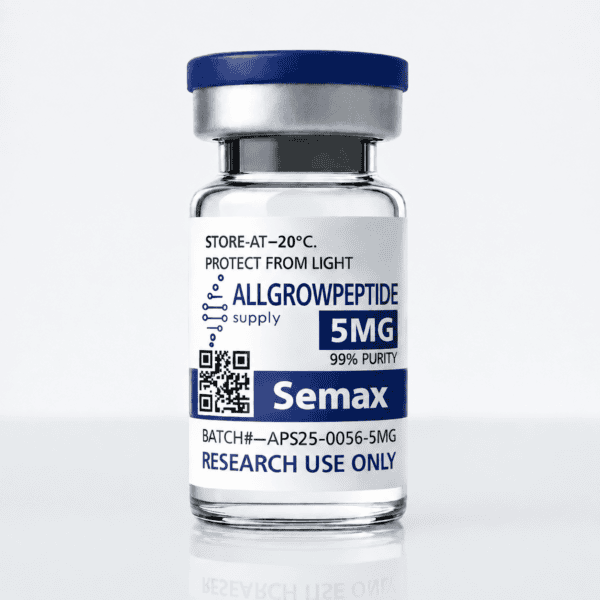
ALLGROWPEPTIDE supplies Semax 10mg as lyophilized powder.
The freeze-dried format supports structural stability during controlled storage.
It also allows accurate measurement and consistent laboratory preparation.
The 10mg quantity suits dose-variation studies and extended research protocols.
Researchers can use it across various controlled experimental designs.
Accurate calculations help maintain consistent molarity across research batches.
Consistent preparation improves reproducibility between test groups and controls.
Reconstitution and Cold-Chain Storage
Researchers should follow validated laboratory procedures during reconstitution.
They should calculate each concentration before preparing experimental solutions.
After reconstitution, laboratories should refrigerate Semax between 2°C and 8°C.
Stable refrigeration helps protect the amino acid sequence.
It also supports consistent structural properties during extended studies.
Researchers should avoid direct light, contamination, and repeated temperature changes.
They should also minimize unnecessary freeze-thaw cycles.
Careful storage supports reliable results across comparative experiments.
Researchers may compare Semax with variants from our extensive peptide library.
These comparisons can support broader neuroactive peptide research.
Key Research Attributes
- Synthetic peptide derived from the ACTH 4–10 fragment
- Relevant to neuroscience and neuroendocrine research
- Suitable for cognitive signaling studies
- Applicable to BDNF-related research models
- Relevant to dopaminergic and serotonergic pathways
- Supports stress-response and neuroadaptation studies
- Useful for synaptic plasticity research
- Lyophilized format for controlled laboratory handling
- Supplied in a 10mg research format
- Intended strictly for controlled in-vitro research
Semax continues to attract scientific interest because of its neuroactive research profile.
Researchers value its relevance to cognition, stress signaling, and neural adaptation.
The peptide also supports comparative research involving neurotrophic and neurotransmitter pathways.
Scientists often include Semax in research libraries focused on central nervous system communication.
Disclaimer
ALLGROWPEPTIDE supplies Semax 10mg strictly for laboratory research.
Do not use this product for human or animal consumption.
Do not use it for treatment, diagnosis, or clinical procedures.
Researchers must follow all applicable laboratory regulations and institutional research standards.