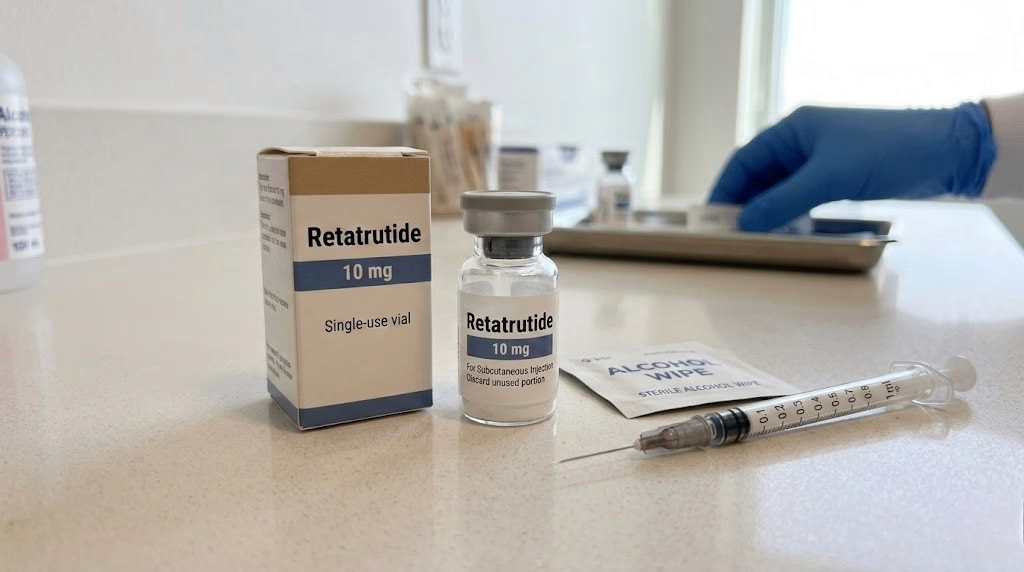
Retatrutide, also known as LY3437943, is a synthetic peptide engineered to activate three metabolically important receptors: the glucose-dependent insulinotropic polypeptide receptor (GIPR), glucagon-like peptide-1 receptor (GLP-1R), and glucagon receptor (GCGR). This triple-receptor profile distinguishes retatrutide from single GLP-1 agonists and dual GIP/GLP-1 agonists.
Researchers study retatrutide because the molecule combines incretin signaling with glucagon-receptor activity in one peptide. Preclinical experiments suggest that this design can influence food intake, glucose regulation, lipid metabolism, and energy expenditure through partially distinct pathways. Clinical research has now progressed from early receptor studies into Phase 3 trials. As of August 2026, retatrutide remains investigational, although several pivotal trials have reported positive results.
What Is Retatrutide?
RT20mg
Retatrutide is a 39-residue synthetic peptide developed by Eli Lilly and Company. Its development code is LY3437943.
The molecule incorporates several structural modifications that distinguish it from naturally occurring GIP, GLP-1, or glucagon. These modifications help balance receptor activity while supporting prolonged systemic exposure.
This representation includes noncanonical residues and a lipid-linked lysine modification. Therefore, simply reporting a standard one-letter amino-acid sequence does not fully describe the molecule.
Chemical Structure
Retatrutide belongs to a growing class of unimolecular multi-receptor agonists.
Its peptide backbone includes modified amino acids such as Aib and α-methyl-leucine. In addition, a C20 fatty-diacid-containing side chain is attached through a linker.
The lipid modification contributes to prolonged exposure, in part through interactions with circulating proteins. Its overall design supports approximately once-weekly pharmacokinetics in human studies.
Retatrutide does not rely on classical intramolecular disulfide bridges as a central structural feature. Instead, biological activity depends on its linear peptide architecture, receptor-binding residues, noncanonical amino acids, and acylated side chain.
Discovery and Research History
Retatrutide emerged from research aimed at extending the biological effects of incretin-based peptides.
Research timeline
2019–2020: early human studies of LY3437943 began.
2022: Coskun and colleagues published major preclinical and Phase 1 findings in Cell Metabolism.
2022: a Phase 1b study reported multiple-dose pharmacokinetics and metabolic findings in type 2 diabetes.
2023: Phase 2 obesity results appeared in the New England Journal of Medicine.
2023: Phase 2 type 2 diabetes results appeared in The Lancet.
2024: a Phase 2a MASLD substudy reported substantial changes in liver fat.
2025: Lilly reported the first successful Phase 3 TRIUMPH-4 topline results.
June 2026:The Lancet published Phase 3 TRANSCEND-T2D-1 data.
June–July 2026: Lilly reported additional Phase 3 TRIUMPH results. Some remain company-reported topline findings rather than fully peer-reviewed publications.
This progression is important because the evidence base now spans receptor assays, animal models, Phase 1 pharmacology, Phase 2 studies, and pivotal Phase 3 trials.
Molecular Mechanism of Retatrutide
The central established mechanism is simultaneous agonism of:
GIPR
GLP-1R
GCGR
All three belong to the class B family of G-protein-coupled receptors.
Receptor Interaction
Coskun and colleagues measured retatrutide activity using low-receptor-density cellular systems.
Reported human receptor cAMP EC50 values were approximately:
GIPR: 0.0643 nM
GLP-1R: 0.775 nM
GCGR: 5.79 nM
Retatrutide showed higher potency at GIPR than native GIP under those assay conditions. Its activity at GLP-1R and GCGR was lower than the respective native ligands.
Importantly, it remained a functional agonist across all three receptors.
These EC50 values should not be treated as universal constants. Receptor density, assay matrix, temperature, incubation time, and protein concentration can alter apparent potency.
Signal Transduction
GIPR, GLP-1R, and GCGR predominantly couple to Gαs.
Activation stimulates adenylyl cyclase and raises intracellular cyclic AMP.
However, the physiological outcome differs between tissues.
For example:
pancreatic receptor signaling can influence insulin and glucagon physiology;
central GLP-1-related signaling can affect feeding behavior;
GIPR signaling operates in pancreatic, adipose, neural, and other tissues;
hepatic GCGR signaling can influence glucose output and lipid metabolism.
Therefore, “triple agonism” should not be interpreted as three identical signaling events.
Receptor Pharmacology Compared
Target
Retatrutide EC50
Native Ligand EC50
Relative Research Interpretation
GIPR
0.0643 nM
0.574 nM
Higher potency than native GIP in the reported cAMP system
GLP-1R
0.775 nM
0.312 nM
Lower potency than native GLP-1
GCGR
5.79 nM
1.97 nM
Lower potency than native glucagon but retains agonist activity
These values come from controlled receptor studies and should be interpreted as assay-specific pharmacology.
Cellular Response and Energy Expenditure
The glucagon component is one of the most scientifically interesting aspects of retatrutide peptide research.
In obese mice, retatrutide reduced food intake and body weight. Researchers also found evidence that GCGR activation increased energy expenditure.
Thus, the proposed model combines:
GIPR-mediated metabolic signaling
GLP-1R-related reduction in food intake
GCGR-related increases in energy expenditure
Preclinical work suggested that adding glucagon-receptor activity produced greater body-weight reduction than mechanisms driven only by GIPR and GLP-1R signaling.
This remains a mechanistic model. Animal findings cannot establish the exact contribution of GCGR activity in humans.
In human adipocyte experiments, retatrutide stimulated GIPR-related functional responses. In hepatocyte models, researchers examined GCGR-mediated glucose output.
The same program demonstrated activity at all three intended receptors.
Phase 1 Research
A Phase 1b study enrolled 72 people with type 2 diabetes.
Researchers tested multiple weekly doses for 12 weeks.
The pharmacokinetic profile was dose proportional, while the estimated half-life was approximately 6 days.
At higher exposure levels, investigators observed reductions in plasma glucose, HbA1c, and body weight.
The highest escalating-dose cohort showed a placebo-adjusted body-weight difference approaching −8.96 kg at week 12.
These findings supported later Phase 2 trials.
Retatrutide and Body-Weight Research
The 2023 Phase 2 obesity trial enrolled 338 adults.
At 48 weeks, mean body-weight changes were:
1 mg: −8.7%
4 mg: −17.1%
8 mg: −22.8%
12 mg: −24.2%
placebo: −2.1%
At 12 mg, 83% of participants achieved at least 15% body-weight reduction.
This trial provided clear dose-response evidence.
However, the results represent controlled human clinical research. They should not be converted into laboratory concentration recommendations or assumed to describe responses outside the studied population.
Phase 3 Developments
Research has progressed further.
In company-reported TRIUMPH-1 Phase 3 results announced in June 2026, participants receiving the highest retatrutide dose reportedly showed an average 28.3% body-weight reduction at 80 weeks.
These are pivotal findings, but readers should distinguish company-reported topline results from peer-reviewed journal publications.
In July 2026, Lilly also reported Phase 3 results from TRIUMPH-2 and TRIUMPH-3.
TRIUMPH-2 included adults with obesity or overweight and type 2 diabetes. The reported highest-dose mean weight reduction was 20.8% at 80 weeks.
TRIUMPH-3 studied severe obesity with established cardiovascular disease. The highest reported mean reduction was 22.6%.
Glucose Regulation Research
Retatrutide’s GIPR and GLP-1R activity makes glucose metabolism another major research field.
The strongest recent evidence comes from TRANSCEND-T2D-1, a Phase 3 randomized study published in The Lancet in June 2026.
The study included 537 participants.
At week 40, mean HbA1c changes were:
4 mg: −1.69%
9 mg: −1.86%
12 mg: −1.94%
placebo: −0.81%
Mean body-weight changes reached:
−11.5% at 4 mg
−13.9% at 9 mg
−15.3% at 12 mg
−2.6% with placebo
The trial therefore provides peer-reviewed Phase 3 evidence for metabolic activity.
Liver and MASLD Research
Liver research has generated unusually quantitative results.
A randomized Phase 2a substudy included 98 participants with metabolic dysfunction-associated steatotic liver disease and baseline liver fat of at least 10%.
After 24 weeks, mean relative liver-fat changes were:
1 mg: −42.9%
4 mg: −57.0%
8 mg: −81.4%
12 mg: −82.4%
placebo: +0.3%
At the same point, liver fat below 5% occurred in:
27% at 1 mg
52% at 4 mg
79% at 8 mg
86% at 12 mg
0% with placebo
The investigators also found associations between liver-fat reduction and changes in body weight, abdominal adiposity, insulin sensitivity, and lipid metabolism.
However, MRI-measured liver fat is not the same endpoint as histological fibrosis regression.
Further controlled studies remain needed.
Gastric and Gastrointestinal Research
Incretin receptor agonists often influence gastrointestinal physiology.
Retatrutide research has found evidence of delayed gastric emptying. The effect can influence nutrient delivery, postprandial glucose patterns, and gastrointestinal tolerability.
The relative contributions of GLP-1R, GIPR, and GCGR to this effect remain difficult to isolate in humans.
This creates several laboratory research opportunities:
gastric motility signaling
gut-brain communication
nutrient sensing
postprandial hormone responses
receptor adaptation during repeated exposure
Obstructive Sleep Apnea and Osteoarthritis Research
Retatrutide’s Phase 3 development program has expanded beyond conventional metabolic outcomes.
The TRIUMPH program includes research into:
obesity
obstructive sleep apnea
knee osteoarthritis
cardiovascular disease
metabolic complications
A peer-reviewed 2026 design paper describes four Phase 3 TRIUMPH trials enrolling more than 5,800 participants.
In TRIUMPH-4, company-reported data showed that participants receiving retatrutide 12 mg lost an average of 28.7% of body weight at 68 weeks.
The same trial evaluated knee osteoarthritis pain and physical function.
Again, these were topline company results when announced. Detailed peer-reviewed analyses should carry greater weight once available.
Current evidence strongly supports involvement of:
cAMP signaling
PKA-associated signaling
EPAC-associated signaling
glucose-dependent pancreatic responses
hepatic glucagon signaling
central appetite-related pathways
adipose metabolic signaling
Gene Expression Findings
A universal retatrutide-specific transcriptional signature has not been established.
Transcriptomic findings can differ among:
hepatocytes
adipocytes
pancreatic tissue
hypothalamic neurons
skeletal muscle
animal species
Therefore, it would be inappropriate to claim that retatrutide consistently upregulates or downregulates a specific gene panel across all tissues.
Future RNA-seq and single-cell studies may clarify this area.
Concentrations Used in Retatrutide Research
In Vitro Research
Receptor studies provide the most defensible concentration reference.
Human receptor EC50 values reported by Coskun et al. were:
GIPR: 0.0643 nM
GLP-1R: 0.775 nM
GCGR: 5.79 nM
These values show that experimental concentrations can span sub-nanomolar to several-nanomolar levels depending on the receptor endpoint.
Researchers should not select one concentration for every cell system.
Important variables include:
receptor abundance
species
exposure duration
protein concentration
assay endpoint
serum content
peptide adsorption
receptor desensitization
A dose-response experiment is generally more informative than one arbitrary concentration.
Animal Research
Published preclinical research used obese mouse models to investigate receptor contribution, food intake, glucose regulation, and energy expenditure.
Animal exposure should always be reported in its original units and protocol.
Animal doses should not be directly converted into human use instructions.
Other Experimental Models
Current evidence includes:
human adipocyte models
engineered receptor cell lines
hepatocyte models
rodent metabolic models
Evidence for topical, biomaterial, or unrelated ex vivo uses remains limited.
Retatrutide Research Applications
Cellular Research
Retatrutide can support studies of:
receptor activation
cAMP accumulation
receptor potency
receptor selectivity
downstream signaling
metabolic cell responses
Molecular Biology
Potential research endpoints include:
GPCR signaling
receptor trafficking
phosphorylation
transcriptomics
second-messenger kinetics
receptor cross-talk
Tissue Research
Relevant experimental systems include:
pancreatic islets
adipose tissue
liver
gastrointestinal tissue
central nervous system models
Mechanistic Research
A particularly important question is whether triple agonism creates biology that cannot be reproduced by simply combining separate agonists.
Researchers can investigate:
receptor synergy
receptor competition
tissue-selective signaling
energy expenditure
nutrient partitioning
Safety Profile in Research
Preclinical Safety
Preclinical safety data formed part of the development program before human trials.
However, long-term mechanistic toxicology data available in public literature remain less extensive than efficacy data.
Long-term data remain limited, especially for emerging research populations and prolonged exposure.
Human Research
In the Phase 2 obesity trial, the most common adverse events were gastrointestinal.
Events were generally:
dose-related
mild to moderate
more frequent during dose escalation
A lower starting dose reduced some gastrointestinal effects.
Researchers also reported dose-dependent increases in heart rate that peaked around week 24 and later declined.
In TRANSCEND-T2D-1, gastrointestinal effects again represented the most frequent adverse-event category.
Study discontinuation due to adverse events occurred in approximately 2–5% of retatrutide groups.
No severe hypoglycemia was reported in that monotherapy trial.
These findings should not be interpreted as demonstrating that experimental retatrutide materials are “risk-free.”
Research Quality Requirements
Retatrutide’s complex structure makes material verification particularly important.
Purity Standards
HPLC can estimate chromatographic purity.
However:
HPLC purity ≠ complete molecular identity.
A supplier specification such as ≥98% HPLC purity describes a particular batch requirement. It is not an inherent property of all retatrutide materials.
Identity Verification
Useful analytical techniques include:
LC-MS
high-resolution mass spectrometry
intact molecular-mass analysis
peptide mapping where appropriate
chromatographic retention profiling
The expected intact molecular mass should be consistent with the defined material and counter-ion form.
The FDA GSRS reference gives approximately 4,731.36 Da for the defined retatrutide structure.
Analytical Documentation
A research procurement package should ideally include:
batch-specific Certificate of Analysis
lot number
HPLC chromatogram
mass spectrum
measured peptide content
purity result
manufacturing or testing date
storage information
retest or expiry information
Additional Testing
Depending on the experiment, useful testing may include:
water content
residual solvents
counter-ion determination
peptide-related impurities
aggregation
endotoxin
microbial testing
Sterility or endotoxin results matter only when the experimental design requires them.
They should not be assumed from HPLC purity.
Storage and Stability
Retatrutide remains an investigational molecule. Therefore, there is no universally applicable retail research-product storage specification that should be copied across suppliers.
Lyophilized Peptide
Stability depends on:
formulation
counter-ion
residual moisture
packaging
oxygen exposure
temperature
light
manufacturing process
Laboratories should prioritize batch-specific stability data.
Peptide in Solution
Solution stability can differ substantially from lyophilized material.
Possible degradation mechanisms include:
oxidation
hydrolysis
deamidation
aggregation
adsorption to surfaces
Repeated freeze-thaw cycles can introduce additional variability.
Therefore:
Storage recommendations may vary by formulation and supplier specification.
A vendor’s recommended storage condition should not automatically be generalized to all retatrutide materials.
Future Retatrutide Research Directions
Mechanistic Research
One key question is how much each receptor contributes to the final phenotype.
Future studies may use:
receptor-knockout models
selective antagonists
tissue-specific deletion
receptor occupancy studies
Energy Expenditure
GCGR activation remains especially interesting.
Further research could separate:
reduced caloric intake from increased energy expenditure.
This distinction may explain differences between dual and triple receptor agonists.
Tissue-Specific Research
Researchers need better mechanistic data from:
liver
adipose tissue
skeletal muscle
cardiovascular tissue
kidney
brain
Clinical changes in an organ do not necessarily prove direct receptor action in that organ.
Pharmacokinetics
Future work can examine:
albumin interactions
tissue distribution
peptide metabolism
clearance
exposure-response relationships
Biomarker Research
Candidate biomarker fields include:
insulin sensitivity
hepatic lipid metabolism
inflammatory markers
cardiovascular risk markers
adipose distribution
receptor-expression patterns
Translational Research
Retatrutide also provides a useful platform for studying unimolecular polypharmacology.
Its development could influence future designs that combine three or more peptide receptor systems.
Research-Grade Retatrutide Quality
For laboratory research, analytical evidence is more useful than promotional terminology.
Independent Verification
A qualified laboratory should be able to confirm molecular identity independently when experimental accuracy requires it.
Batch Documentation
An ideal traceability chain is:
lot number → HPLC data → mass spectrum → specification → storage record
Manufacturing Consistency
Between-batch differences can affect:
biological potency
receptor assays
quantitative dose-response work
stability experiments
Relevant variables include peptide content, related impurities, moisture, counter-ion content, oxidation, and aggregation.
Research Support
ALLGROWPEPTIDE provides research-focused documentation for qualified peptide materials, subject to batch availability and product specification.
This statement should be supported by the documentation actually available for each batch.
Terms such as “medical-grade,” “guaranteed results,” or “100% safe” should not be used for research materials.
Conclusion
Retatrutide is a synthetic 39-residue peptide designed to activate GIPR, GLP-1R, and GCGR within one molecular structure. Its receptor profile makes it scientifically different from conventional GLP-1 agonists and dual GIP/GLP-1 agonists.
At the molecular level, retatrutide activates cAMP signaling through all three target receptors. Published experiments show especially high GIPR potency while retaining functional GLP-1R and GCGR agonism.
Preclinical research suggests that GLP-1R and GIPR pathways can reduce energy intake, while GCGR activation may contribute additional energy-expenditure effects. Human research has progressed rapidly. Phase 2 trials documented dose-responsive metabolic changes, while Phase 3 research now provides stronger evidence in type 2 diabetes and obesity-related conditions.
However, evidence levels must remain separate. Cellular findings, animal studies, peer-reviewed clinical trials, and company-reported Phase 3 topline data should not be treated as equivalent.
For laboratory studies, analytical identity, purity, stability, assay conditions, receptor expression, and exposure concentration all matter. Future research should clarify receptor-specific mechanisms, tissue-selective effects, transcriptomic responses, biomarkers, and the long-term consequences of triple-receptor signaling.
Research Highlights
Retatrutide is also known as LY3437943.
It contains 39 amino-acid residues.
Molecular weight is approximately 4,731.36 Da.
It activates GIPR, GLP-1R, and GCGR.
Reported human EC50 values are approximately 0.0643, 0.775, and 5.79 nM, respectively.
Human pharmacokinetic research reports a half-life of approximately 6 days.
Phase 2 obesity research showed mean weight change up to −24.2% at 48 weeks.
A MASLD substudy reported liver-fat reductions exceeding 80% at higher studied doses.
A peer-reviewed 2026 Phase 3 trial confirmed substantial effects on HbA1c and body weight.
Several additional Phase 3 results reported in 2026 remain subject to full peer-reviewed publication.
Research Use Only
Research Use Only: Retatrutide research material described on this page is intended for laboratory research and scientific investigation only. It is not presented as a medicine, treatment, diagnostic product, or recommendation for human or veterinary use. Retatrutide remains an investigational compound as of August 2026, and research materials should not be represented as equivalent to an approved pharmaceutical product.
References
Coskun T, Urva S, Roell WC, et al. LY3437943, a novel triple glucagon, GIP, and GLP-1 receptor agonist for glycemic control and weight loss: From discovery to clinical proof of concept.Cell Metabolism. 2022;34(9):1234-1247.e9. DOI: 10.1016/j.cmet.2022.07.013. PMID: 35985340.
Urva S, Coskun T, Loh MT, et al. LY3437943, a novel triple GIP, GLP-1, and glucagon receptor agonist in people with type 2 diabetes: a phase 1b, multicentre, double-blind, placebo-controlled, randomised, multiple-ascending dose trial.Lancet. 2022;400(10366):1869-1881. DOI: 10.1016/S0140-6736(22)02033-5. PMID: 36354040.
Jastreboff AM, Kaplan LM, Frías JP, et al. Triple-Hormone-Receptor Agonist Retatrutide for Obesity—A Phase 2 Trial.New England Journal of Medicine. 2023;389(6):514-526. DOI: 10.1056/NEJMoa2301972. PMID: 37366315.
Rosenstock J, Frias J, Jastreboff AM, et al. Retatrutide, a GIP, GLP-1 and glucagon receptor agonist, for people with type 2 diabetes: a phase 2 trial.Lancet. 2023;402(10401):529-544. DOI: 10.1016/S0140-6736(23)01053-X. PMID: 37385280.
Sanyal AJ, Kaplan LM, Frias JP, et al. Triple hormone receptor agonist retatrutide for metabolic dysfunction-associated steatotic liver disease: a randomized phase 2a trial.Nature Medicine. 2024;30:2037-2048. DOI: 10.1038/s41591-024-03018-2. PMID: 38858523.
Bajaj HS, Welch M, Shah P, et al. Efficacy and safety of retatrutide, a GIP, GLP-1, and glucagon receptor agonist, in people with type 2 diabetes and inadequate glycaemic control with diet and exercise (TRANSCEND-T2D-1).Lancet. 2026;407(10546):2402-2413. DOI: 10.1016/S0140-6736(26)00967-0. PMID: 42250575.
Giblin K, et al. Retatrutide for the treatment of obesity, obstructive sleep apnea and knee osteoarthritis: Rationale and design of the TRIUMPH registrational clinical trials.Diabetes, Obesity and Metabolism. 2026. DOI: 10.1111/dom.70209. PMID: 41090431.
U.S. FDA Global Substance Registration System. Retatrutide substance record. Molecular formula C221H342N46O68; molecular weight approximately 4,731.36.
ClinicalTrials.gov. TRIUMPH-3: A Study of Retatrutide (LY3437943) in Participants With Obesity and Cardiovascular Disease. NCT05882045.
Eli Lilly and Company. TRIUMPH-4 Phase 3 topline results. December 11, 2025. These company-reported findings should be distinguished from peer-reviewed trial publications.
Eli Lilly and Company. Additional Phase 3 retatrutide results from the TRIUMPH program. June 6, 2026.
Eli Lilly and Company. TRIUMPH-2 and TRIUMPH-3 Phase 3 topline results. July 23, 2026. Lilly stated that retatrutide remained investigational and planned regulatory submission for 2027.